
Introduction: Unlocking the “WhatsApp Economy” for Nigerian Businesses
The Power of WhatsApp in Nigeria: Why it’s Your Next Growth Engine
WhatsApp has transcended its original role as a mere messaging application in Nigeria, evolving into a fundamental pillar of the nation’s digital commerce landscape, often referred to as the “WhatsApp Economy.” This transformation is evidenced by its remarkable penetration rate, estimated at 95.1% among Nigeria’s online population, which positions it as the highest usage rate globally. Furthermore, Nigeria stands as the fifth-largest country in terms of WhatsApp Business users, generating an estimated revenue of $382 million in 2023. This pervasive adoption is largely attributable to WhatsApp’s inherent accessibility, its efficient low data usage, and the increasing internet penetration across the country.
The profound integration of WhatsApp into Nigerian daily life extends beyond simple communication; it serves as a primary platform for commercial interactions. Data indicates that a significant 67% of Nigerian online purchases commence with a chat conversation. This statistic reveals a critical aspect of consumer behavior in Nigeria: a strong preference for conversational, relationship-based commerce, which mirrors traditional market interactions. Consequently, WhatsApp is not merely a supplementary tool but the predominant ecosystem where commercial activities naturally unfold. For businesses, this implies that neglecting a robust WhatsApp presence means missing the most significant customer engagement and sales funnel available in the market. A seamless WhatsApp presence is, therefore, not just an advantage but a strategic imperative for competitive survival and sustainable growth.
Introducing the “Profit Hexagon”: A Framework for Seamless WhatsApp Success
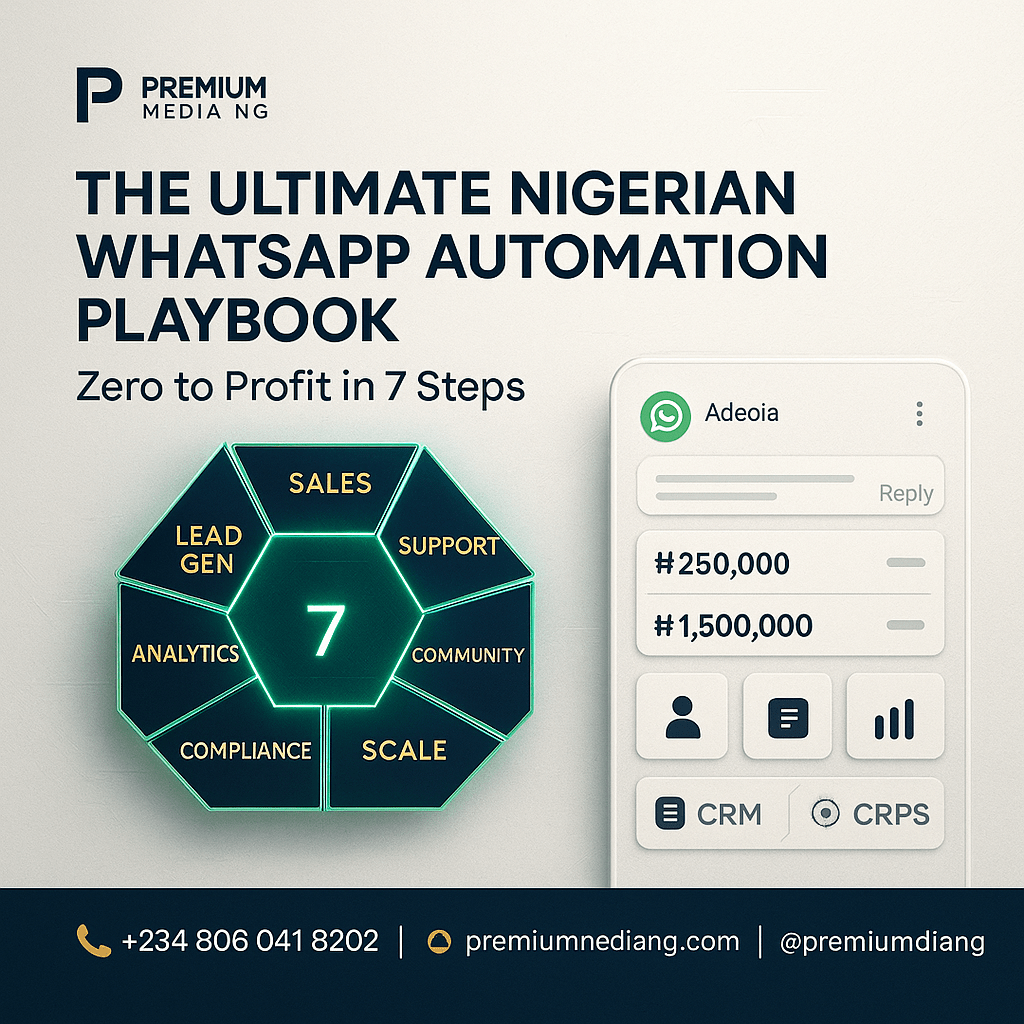
To guide Nigerian businesses from disconnected communication to a streamlined, profitable digital operation, this playbook introduces the “Profit Hexagon.” This framework delineates six critical dimensions where WhatsApp automation directly contributes to business profitability and growth:
- Lead Generation: Efficiently attracting and qualifying new prospective customers.
- Sales Conversion: Optimizing the sales funnel to drive purchases and minimize abandoned transactions.
- Customer Support: Providing instant, round-the-clock assistance and effectively resolving inquiries.
- Customer Retention: Cultivating customer loyalty and fostering repeat business.
- Operational Efficiency: Automating repetitive tasks to conserve valuable time and resources.
- Data-Driven Insights: Extracting actionable intelligence from interactions to continuously refine strategies.
This comprehensive playbook will navigate Nigerian businesses through practical, actionable steps to establish, optimize, and scale their WhatsApp ecosystem across these six pillars. The objective is to transform current communication challenges into a seamless, profit-generating machine, leveraging the unique opportunities presented by the Nigerian digital landscape.
Understanding the WhatsApp Business Platform: App vs. API for Scale
Key Differences and When to Upgrade
The WhatsApp Business Platform offers two distinct solutions tailored to varying business needs: the standard WhatsApp Business App and the WhatsApp Business API (Application Programming Interface). The WhatsApp Business App is generally suitable for small businesses, typically those with 1-5 employees, characterized by lower message volumes and a need for basic communication features. This app allows for a maximum of four active users and imposes a broadcast limit of 256 contacts.
In contrast, the WhatsApp Business API is engineered for medium to large businesses that demand advanced features, the capacity to handle significantly higher message volumes, and robust scalability. A critical distinction of the API is its lack of a built-in user interface, necessitating integration with a custom-developed tool or a third-party Business Solution Provider (BSP) for effective operation. The decision to transition from the free WhatsApp Business App to the paid API represents a strategic turning point for growth-oriented Nigerian SMEs. This upgrade signifies a commitment to scaling operations beyond the inherent limitations of manual management. The API’s requirement for external integration, whether through a BSP or in-house development, is a crucial detail that often poses a barrier for SMEs. This highlights the indispensable role of selecting an appropriate partner to navigate the technical complexities, transforming a seemingly feature-based decision into a strategic partnership choice.
Benefits of the WhatsApp Business API for Nigerian SMEs
The WhatsApp Business API offers a multitude of advantages that are particularly pertinent for Nigerian SMEs aiming to professionalize and expand their digital operations:
- Scalability and Multi-User Access: The API supports an unlimited number of team members, each capable of managing customer communications effectively through their dedicated dashboards. This capability is vital for businesses seeking to grow beyond the limitations of a single operator, enabling efficient handling of high conversation volumes.
- Advanced Automation: Seamless integration with existing CRM platforms, marketing automation tools, and customer support systems is a hallmark of the API. This facilitates the implementation of sophisticated chatbots, enabling process automation, contact synchronization, and providing 24/7 support for frequently asked questions (FAQs) and routine inquiries. This automation frees human agents to concentrate on more complex and nuanced customer interactions.
- Enhanced Engagement and Trust: The API offers interactive messaging features such as quick replies, list menus, and buttons, which streamline user interactions. It also enables broadcast and bulk messaging to thousands of opted-in users and allows businesses to obtain a verified profile with a green checkmark, significantly fostering trust and improving engagement rates. Messages sent via the API achieve an impressive 98% open rate and contribute to conversion rates ranging between 45-60%. The combination of unlimited users and CRM integration fundamentally transforms customer management. It enables a shift from individual customer relationships, often managed by a single person, to a standardized, team-based customer experience. This is crucial for professionalizing and scaling customer interactions, moving away from the informal, often chaotic, individual-driven WhatsApp usage prevalent in smaller Nigerian businesses. This transition allows for a shared, centralized view of customer history, preferences, and interactions, accessible to the entire team, which is foundational for consistent service and personalized marketing at scale.
- Data and Analytics: The API provides detailed analytics tracking capabilities, offering valuable insights into performance, user behavior, and engagement patterns. This data-driven approach empowers businesses to optimize their strategies for maximum impact.
Step 1: Laying the Foundation – Verification & Compliance
Business Verification: Navigating Facebook Business Manager and BSPs
To leverage the full capabilities of the WhatsApp Business API, businesses must undergo a verification process. This typically involves applying through an official Business Solution Provider (BSP) or, for those with sufficient technical expertise, directly via Meta’s Cloud API. The verification journey encompasses several key stages: verifying your Facebook Business Manager account, submitting necessary business documentation (such as a certificate of incorporation), registering a dedicated phone number (one not currently associated with a personal WhatsApp account), establishing your WhatsApp Business profile, and securing approval for your message templates.
A verified WhatsApp business profile, distinguished by a green checkmark, is instrumental in establishing immediate trust and conveying professionalism to customers. This visual cue is more than a mere badge; it serves as a powerful psychological signal of legitimacy. In a market like Nigeria, where trust can be a significant barrier to digital transactions and concerns about scams are prevalent, this verification directly influences customer acquisition and conversion rates, particularly for businesses transitioning from informal to formal digital operations. The requirement for a “legally registered business with valid government-issued documentation” for API access implicitly encourages, and in many cases necessitates, the formalization of informal Nigerian SMEs. While this may present an initial hurdle due to associated costs and bureaucratic processes, it simultaneously acts as a catalyst for greater credibility and opens doors to broader financial services, contributing to the overall stability and growth potential of the business within the “Profit Hexagon.”
Meta’s 2024 Compliance Essentials: Opt-in Requirements, Data Privacy (NDPR), and Avoiding Common Pitfalls
Adherence to Meta’s compliance policies and relevant local regulations is paramount for any business utilizing the WhatsApp Business Platform.
- Opt-in Permission: Explicit consent from customers is a mandatory prerequisite for initiating business conversations. This necessitates clear communication regarding the value proposition of receiving updates and providing diverse opt-in channels, such as clear calls-to-action (CTAs) on websites or QR codes.
- Data Privacy Regulations: Strict adherence to data privacy regulations, including global standards like GDPR and Nigeria’s specific Nigeria Data Protection Regulation (NDPR), is critical. Nigeria’s Federal Competition and Consumer Protection Commission (FCCPC) has notably imposed substantial fines on Meta for data privacy violations , underscoring the stringent regulatory environment. Businesses must maintain a comprehensive privacy policy, collect user data only with appropriate consent, and promptly honor all opt-out requests. The Nigerian regulatory actions against Meta, including FCCPC fines for data privacy, Advertising Regulatory Council of Nigeria (ARCON) fines for unapproved advertisements, and National Data Protection Commission (NDPC) fines for data privacy violations , serve as a significant warning. This indicates that Nigerian businesses must not only comply with Meta’s global policies but also pay explicit attention to local data protection and advertising laws. Failure to do so carries substantial financial and reputational risks, with the potential to disrupt entire WhatsApp-driven operations. The Nigerian government’s willingness to impose large penalties on a tech giant like Meta sets a precedent, meaning local regulations are strictly enforced. For Nigerian SMEs, this means simply adhering to Meta’s global policies is insufficient; they must proactively understand and comply with local Nigerian data protection, consumer protection, and advertising laws. This adds a layer of complexity and risk, necessitating legal counsel or a BSP with strong local compliance expertise. Non-compliance could lead to severe penalties, account suspension, and loss of customer trust, directly impacting the “Profit Hexagon” by jeopardizing operations and revenue.
- Messaging Policies: Approved message templates are a requirement for all business-initiated conversations. These messages are categorized into Marketing, Utility, Authentication, and Service, each with distinct use cases and pricing structures.
- Pricing Model (Effective July 1, 2025): Meta transitioned to a per-message pricing model, replacing the previous per-conversation model.
- Marketing messages: These are charged per delivered message and are used for promotions, offers, and abandoned cart reminders.
- Utility messages: Charged per delivered message, but are free if sent within the 24-hour customer service window in response to a user-initiated message. These messages are typically transactional, such as order confirmations or delivery updates.
- Authentication messages: Charged per delivered message, primarily used for one-time passwords (OTPs) and identity verification.
- Service messages: These messages are free when sent within the 24-hour customer service window, which resets with each new user message.
- Volume-based pricing tiers are available, offering lower rates for higher message volumes.
- Notably, all messages are free for 72 hours if the conversation is initiated from a “free entry point,” such as Click-to-WhatsApp Ads or Facebook Page call-to-action buttons.
The Nigerian regulatory environment, particularly the ongoing disputes between Meta and Nigerian authorities, introduces a significant external risk factor for Nigerian businesses heavily reliant on WhatsApp. This situation implies that while WhatsApp presents immense opportunities, businesses must also develop contingency plans or diversify their digital communication channels to mitigate potential disruptions stemming from regulatory actions.
Table 1: Meta’s 2024 WhatsApp Business API Message Categories & Pricing Model (Nigeria Focus)
This table provides a clear, concise overview of Meta’s message categories, their primary use cases, and the associated pricing model for messages delivered to Nigerian recipients. It highlights free windows and volume discounts, enabling businesses to understand costs, budget effectively, and optimize their messaging strategies by leveraging free opportunities. This directly addresses the need for clarity on “payment hurdles” and “Meta’s 2024 compliance requirements,” empowering SMEs to make informed decisions that contribute to operational efficiency and sales conversion within the “Profit Hexagon.”
| Message Category | Primary Use Case | Pricing (Nigeria Focus) | Key Pricing Notes |
| Marketing | Promotional offers, product suggestions, abandoned cart reminders, retargeting | Charged per delivered message | Volume discounts apply. |
| Utility | Order confirmations, delivery updates, payment reminders, account updates, alerts | Charged per delivered message; FREE if sent within 24-hour customer service window (user-initiated) | Volume discounts apply. |
| Authentication | One-time passwords (OTPs), identity verification for login/transactions | Charged per delivered message | Higher rates for international authentication messages in Nigeria from Feb 2025. Volume discounts apply. |
| Service | Responding to customer-initiated inquiries (agent or chatbot) | FREE within the 24-hour customer service window | 24-hour window resets with each user message. |
| Free Entry Point | Conversations initiated from Click-to-WhatsApp Ads or Facebook Page CTAs | All messages (including templates) FREE for 72 hours | Encourages advertising spend to generate free, high-engagement conversations. |
Step 2: Building Your WhatsApp Presence – Profile & Catalogs
Crafting a Verified Business Profile
Establishing a credible and professional presence on WhatsApp begins with a meticulously crafted and verified business profile. A verified profile, prominently displaying a green checkmark next to the business name, immediately builds trust and conveys professionalism. This visual validation is critical for a business’s authenticity, particularly in digital environments where discerning legitimate entities from fraudulent ones is a constant concern. The profile should include the official business name, a clear and recognizable logo, a concise 256-character description that effectively communicates the business’s value proposition, and accurate business hours.
In a market such as Nigeria, where trust can be a significant impediment to digital transactions and the threat of scams is a recognized issue, the “green checkmark” is more than a mere badge of honor; it serves as a powerful psychological signal of legitimacy. This directly influences customer acquisition and conversion rates, particularly for businesses that are transitioning from informal to more formalized digital operations. The presence of this verification significantly reduces the perceived risk for customers, accelerating the trust-building phase that is often a prerequisite for transactions within the “WhatsApp Economy.” This enhanced trust directly translates to higher lead conversion and increased sales, as customers are more inclined to engage and transact with a visibly legitimate entity.
Showcasing Products with WhatsApp Catalogs
WhatsApp Catalogs provide businesses with the capability to create a dynamic mobile storefront directly within the application, allowing them to showcase products with high-quality images, detailed descriptions, and transparent pricing. This feature fundamentally simplifies the buying journey for customers, encouraging impulse purchases and effectively serving as a “big sales funnel”. Businesses can regularly update their catalog, even daily, and proactively notify customers about new items or promotions, which consistently leads to increased sales.
The catalog feature, especially when coupled with daily updates and direct notifications, transforms WhatsApp from a mere communication tool into a dynamic e-commerce storefront, effectively bringing the “store to the customer’s phone”. This is particularly impactful in Nigeria, where a substantial portion of online purchases originates from chat conversations , and traditional e-commerce platforms often encounter difficulties with cultural practices such as price negotiation. In Nigeria, where “shopping has always been more than just a transaction – it’s a social interaction” , the WhatsApp Catalog functions as a visual and interactive component seamlessly integrated within the conversational flow. It supports the informal, relationship-based commerce preferred by Nigerians by enabling product browsing directly within the chat, thereby reducing the necessity for customers to navigate to external websites, which might be data-intensive or perceived as less trustworthy. The capacity to update the catalog daily and send notifications creates a continuous engagement loop that mirrors the experience of visiting a physical market stall, fostering repeat business and directly contributing to sales conversion within the “Profit Hexagon.”
Step 3: Automating Conversations – Chatbots & Templates
Implementing Chatbots for 24/7 Support: FAQs, Lead Qualification, and Basic Inquiries
Chatbots are an indispensable component for businesses aiming to provide instant, round-the-clock customer assistance. They are highly effective in handling common and repetitive questions, such as inquiries about order status, return policies, or operating hours, thereby significantly reducing manual workloads for human agents. By automating these routine interactions, chatbots free up human customer service representatives to concentrate on more complex, nuanced, and high-value customer issues. Beyond basic support, chatbots can also play a crucial role in instantly qualifying leads and even scheduling appointments, ensuring that potential customer inquiries do not “slip through the cracks”. Globally, WhatsApp chatbots demonstrated immense efficiency in 2023, saving over 2.5 billion hours and an estimated $11 billion by resolving repetitive queries without requiring human intervention.
The 24/7 availability of chatbots holds particular significance in Nigeria, where challenges such as frequent power outages and inconsistent internet connectivity can disrupt traditional business hours and customer service operations. Chatbots ensure continuous customer engagement even when human agents are unavailable, maintaining service levels and capturing leads around the clock. In a country experiencing frequent power outages and internet instability , traditional customer service channels like phone lines or physical stores can be severely disrupted. A 24/7 chatbot on WhatsApp provides a resilient, always-on touchpoint for customers, irrespective of business operating hours or local infrastructure challenges. This minimizes customer frustration, ensures uninterrupted lead capture, and provides essential support during off-peak hours or periods of disruption, directly contributing to improved customer satisfaction and enhanced lead generation within the “Profit Hexagon.”
Leveraging Message Templates: Efficient Communication for Common Scenarios
WhatsApp offers two primary modes of communication for businesses: session messaging and template messaging. Session messaging facilitates open, two-way conversations for a duration of 24 hours following a customer’s last response. Beyond this 24-hour window, businesses must utilize pre-approved template messages for any business-initiated communication. These templates are crucial for maintaining consistent messaging, incorporating interactive elements like quick replies, list menus, and buttons, and are indispensable for various message categories including marketing, utility, and authentication.
The strategic deployment of template messages, especially utility templates within the free service window, is fundamental for cost optimization. This approach shifts the focus from merely sending messages to sending valuable, timely, and compliant messages, directly impacting the “Operational Efficiency” aspect of the Profit Hexagon. Meta’s pricing structure incentivizes businesses to encourage user-initiated conversations, which open a free 24-hour service window. Within this window, businesses can respond promptly using free-form messages or utility templates without incurring additional messaging costs. This strategic approach necessitates designing customer journeys that encourage inbound messages and configuring both automated chatbots and human agents for rapid responses. This not only reduces direct communication expenses but also elevates customer satisfaction through timely support, thereby enhancing operational efficiency and customer retention.
Best Practices for Automation: Humanizing Interactions, Clear CTAs, Avoiding Spam
Effective WhatsApp automation extends beyond mere technical implementation; it demands adherence to best practices that prioritize customer experience and compliance.
- Personalization: Messages should be personalized by addressing subscribers by name, referencing past interactions, and tailoring content to their specific needs and interests.
- Promptness: Aim for rapid response times, ideally within 24 hours, by leveraging automated tools for frequently asked questions.
- Clarity and Value: Messages must be simple, clear, informative, and persuasive, consistently offering value at every touchpoint. Strategic use of rich media is encouraged, but only when it significantly enhances the message’s value.
- Human Touch and Transparency: Maintain a conversational tone, use emojis appropriately, and be transparent about the use of a chatbot. Crucially, always provide a straightforward option for customers to transition to a human agent for complex issues.
- Avoid Spam: It is imperative to avoid overwhelming users with excessive or unsolicited messages and to promptly honor all opt-out requests. Over-usage of emojis or sending unnecessary voice notes can also detract from the customer experience.
- Testing and Refinement: Continuous testing of workflows, diligent monitoring of performance metrics (such as open rates, click-through rates, and conversion rates), and iterative refinement of strategies based on data and user feedback are essential for sustained success.
Step 4: Mastering Multi-Lingual Engagement
Addressing Nigeria’s Linguistic Diversity: Supporting Local Languages (e.g., Hausa, Yoruba, Igbo)
Nigeria is characterized by its immense linguistic diversity, boasting over 500 languages. While the standard WhatsApp Messenger application supports over 40 languages on iOS and more than 60 on Android , the WhatsApp Cloud API offers broader support for message templates, including major Nigerian languages such as Hausa (ha), Yoruba (yo), and Igbo (ig).
The direct support for major Nigerian languages like Hausa, Yoruba, and Igbo within WhatsApp API templates represents a significant advancement for localized communication. This capability extends beyond generic English communication, enabling businesses to connect with a broader and more diverse customer base in their native tongues. This fosters deeper trust and engagement, which is particularly critical in a relationship-driven market like Nigeria. Given Nigeria’s linguistic diversity, a substantial portion of the population may not be fluent or comfortable conducting complex transactions in English. By offering communication in native languages, businesses can significantly increase accessibility, reaching previously underserved or less digitally literate segments of the population. Furthermore, communicating in a customer’s native language makes them “feel at home” , which is paramount in Nigeria’s relationship-based commerce , signaling genuine care and understanding. This also improves comprehension and reduces errors, as complex product information, terms, or support instructions are better understood in a native language, leading to fewer miscommunications and higher satisfaction. Ultimately, this directly contributes to Lead Generation and Customer Retention by expanding the addressable market and deepening customer loyalty within the “Profit Hexagon.”
Strategies for Multi-Language Support: Auto-Detection, Localized Templates, and Staff Training
Implementing effective multi-lingual support on WhatsApp requires a comprehensive strategy that goes beyond simple translation.
- Multi-Language Profile Setup: Businesses should configure their WhatsApp Business profile in multiple languages, ensuring that the official business name, description, and automated replies are available in the relevant local languages.
- Auto-Language Detection: Utilizing tools capable of detecting a user’s language in real-time, such as WADesk or Gboard, can streamline initial interactions.
- Localized Templates: Create quick replies and message templates tailored for each language, incorporating placeholders for personalization. It is crucial to ensure these templates are approved by WhatsApp, noting that each language version counts as a separate template against usage limits.
- Multilingual Staff Training: Invest in training staff on cultural differences and language nuances to effectively manage dialects and mixed-language conversations. Hiring local customer service agents can also provide significant benefits in this regard.
- Consent for Language Preference: Explicitly request and document customers’ language preferences to ensure compliance and tailor communications appropriately.
Beyond mere translation, the emphasis on “cultural sensitivity” and the management of “dialects and mixed-language conversations” underscores the necessity for a nuanced localization strategy. This extends beyond technical capability and demands a deep understanding of the local context, which can be achieved through partnerships with local experts or BSPs possessing strong Nigerian market knowledge. Simply translating words without considering cultural nuances, idioms, or communication styles can lead to misinterpretations or even unintended offense. For instance, the direct, transactional communication common in some Western contexts might be perceived as abrupt or impersonal within Nigeria’s relationship-focused “WhatsApp Economy”. Achieving genuine multi-lingual engagement therefore requires investing in local expertise, whether through hiring multilingual staff with cultural understanding or collaborating with BSPs that demonstrate this capability. This ensures that both automated and human interactions resonate authentically with Nigerian customers, fostering stronger relationships and trust, which are foundational for long-term customer retention and brand advocacy within the “Profit Hexagon.” It also mitigates the risk of negative customer feedback or brand damage due to cultural insensitivity.
Table 2: WhatsApp API Supported Languages Relevant to Nigeria
This table lists key languages supported by WhatsApp API message templates, specifically highlighting major Nigerian languages and other relevant regional languages. It enables Nigerian SMEs to strategically plan their language offerings, ensuring that their automation efforts can effectively reach and resonate with Nigeria’s diverse population. This directly contributes to expanding market reach and improving customer satisfaction by enabling communication in preferred native languages, thereby enhancing the overall “Profit Hexagon.”
| Language Name | Language Code |
| English (US) | en_US |
| Hausa | ha |
| Igbo | ig |
| Yoruba | yo |
| Arabic | ar |
| French | fr |
| Swahili | sw |
| Portuguese (BR) | pt_BR |
| Hindi | hi |
| Turkish | tr |
| Indonesian | id |
| Malay | ms |
| Urdu | ur |
| Bengali | bn |
| Marathi | mr |
| Gujarati | gu |
| Tamil | ta |
| Telugu | te |
| Kannada | kn |
| Afrikaans | af |
| Amharic | am |
| Somali | so |
| Zulu | zu |
| Xhosa | xh |
| Kinyarwanda | rw_RW |
| Luganda | lg |
| Oromo | om |
| Tigrinya | ti |
| Wolof | wo |
| Ewe | ee |
| Ga | ga |
| Twi | tw |
| Fula | ff |
Export to Sheets
Note: This list is based on languages supported by WhatsApp Cloud API message templates and general WhatsApp Messenger support , focusing on relevance to Nigeria and broader African context.
Step 5: Navigating Payments & Transactions
Integrating with Local Payment Gateways: Flutterwave, Paystack, and Other Nigerian Solutions
While WhatsApp has implemented its own in-app payment system in certain countries, such as India and Brazil through the Unified Payments Interface (UPI) , direct native in-app payment processing via WhatsApp is not yet broadly available in Nigeria in the same manner. Consequently, Nigerian businesses must rely on integrating WhatsApp with established local payment gateways to facilitate transactions. Prominent Nigerian payment solutions include Flutterwave, Paystack, Interswitch, and VoguePay.
Tools such as Zapier and Integrately enable automation that allows businesses to “Share new Flutterwave order via WhatsApp message” or dispatch WhatsApp notifications for new Paystack orders. Paystack’s “Zap” application further streamlines money transfers within Nigeria, enabling users to link all their Nigerian bank accounts and utilize scan-to-pay functionality for quick and secure transactions. The absence of native WhatsApp Pay in Nigeria, unlike in India or Brazil, means businesses must rely on seamlessly integrating payment links from local gateways into WhatsApp conversations. This highlights the critical importance of robust API integrations, facilitated either by Business Solution Providers (BSPs) or through custom development, to bridge this gap. The objective is to ensure that the payment process remains in-chat and frictionless, aligning with the prevalent Nigerian preference for conversational commerce. The “WhatsApp Economy” in Nigeria thrives on a blend of technology and traditional, relationship-based commerce. While a direct in-app payment solution is not widely available, the ability to generate and share payment links from trusted local gateways like Flutterwave and Paystack directly within the WhatsApp chat maintains the conversational flow and minimizes friction. This “in-chat payment link” approach leverages existing payment infrastructure and consumer familiarity, making transactions feel seamless and secure without compelling customers to exit their preferred communication channel. This directly enhances Sales Conversion and Operational Efficiency by simplifying the checkout process and reducing abandoned carts.
Facilitating In-Chat Payments: Payment Links and Mobile Money Integration
To facilitate seamless in-chat payments, businesses can generate payment links directly from their chosen payment gateway (e.g., Paystack, Flutterwave) and transmit them to customers via WhatsApp. Customers can then click these links to complete their payments without exiting the WhatsApp ecosystem, thereby simplifying the transaction process significantly.
The African continent has witnessed a rapid expansion of mobile money platforms, with over 1.1 billion registered accounts, and these platforms are increasingly integrating with e-commerce solutions. In Nigeria, solutions like MoMo PSB offer APIs for collections and disbursements, enabling businesses to manage financial flows efficiently. Furthermore, the emergence of AI-powered banking assistants, such as Xara in Nigeria, allows users to execute money transfers through natural language commands directly within WhatsApp, linking to their bank accounts. The rise of mobile money and AI-powered in-chat banking solutions indicates a strong trend towards “conversational commerce” in Nigeria. This suggests that the future of payments is not merely about integrating gateways but about embedding financial services directly into the chat interface, making transactions as intuitive as sending a message and further solidifying WhatsApp’s role as a commerce hub. The convergence of mobile money’s widespread adoption with AI-powered conversational banking within WhatsApp signifies a strategic shift towards truly embedded finance. This means that payments are no longer a separate, external step but an integral, frictionless part of the chat conversation. This trend will further reduce friction in the sales funnel, leading to higher conversion rates and an improved customer experience. For SMEs, it implies less reliance on traditional, often cumbersome, payment methods and greater adoption of intuitive, in-chat transactions. This directly enhances the “Sales Conversion” and “Operational Efficiency” aspects of the “Profit Hexagon,” as businesses can close deals faster and with fewer manual interventions. It also builds greater trust by keeping the transaction within the familiar and secure WhatsApp environment.
Addressing Payment Hurdles: Security, Trust, and Informal Transaction Challenges
Despite the advancements in WhatsApp payment integration, several hurdles persist within the Nigerian context that businesses must address.
- Trust and Security: While WhatsApp offers end-to-end encryption for communications , customer concerns regarding data security for financial transactions remain. Businesses must ensure that their chosen payment gateways are robustly secure and fully compliant with relevant regulations.
- Regulatory Disputes: The ongoing data privacy disputes between Meta and Nigerian regulators, including the FCCPC and NDPR , introduce an element of uncertainty. This situation underscores the critical importance of adhering to both Meta’s policies and local Nigerian laws. The regulatory disputes between Meta and Nigerian authorities introduce a significant external risk factor for Nigerian businesses heavily reliant on WhatsApp. This implies that while WhatsApp offers immense opportunities, businesses must also consider contingency plans or diversify their digital channels to mitigate potential disruptions stemming from regulatory actions. The ongoing regulatory dispute indicates that the operating environment for Meta platforms in Nigeria is not entirely stable. While Meta is unlikely to withdraw entirely given Nigeria’s status as a major market, the possibility of service disruptions, policy changes, or even temporary restrictions due to non-compliance by Meta itself poses a direct threat to Nigerian businesses whose operations are heavily dependent on WhatsApp. This necessitates a proactive risk management approach, including maintaining other communication channels (e.g., email, SMS for critical alerts), staying updated on Nigerian data protection and consumer laws, and regularly backing up critical customer data and conversation history. This adds a layer of strategic planning to ensure business continuity and protect the “Profit Hexagon” from external regulatory shocks.
- Informal Transactions: Nigeria’s payment culture often involves informal interactions and cash-based transactions. Solutions like OnePipe’s PaywithAccount are emerging to formalize these interactions by enabling businesses to set up digital payment mandates.
- Low Technical Know-how: The adoption of QR code payments in Nigeria has been limited, partly due to a perceived lack of technical familiarity among users. This highlights the preference for simpler, chat-based payment methods that require minimal technical expertise.
Step 6: Driving Growth with ROI-Focused Workflows
Lead Generation & Nurturing: From Click-to-WhatsApp Ads to Automated Follow-ups
Effective lead generation and nurturing are pivotal for business growth, and WhatsApp automation offers powerful tools to streamline these processes.
- Click-to-WhatsApp Ads: Businesses can strategically run advertisements on platforms like Facebook and Instagram that directly prompt users to initiate a conversation on WhatsApp. A significant advantage of this approach is that conversations originating from these ads are free for a period of 72 hours.
- Automated Lead Qualification: Chatbots can provide immediate responses to leads generated from these advertisements, efficiently qualify them based on predefined criteria, and even schedule appointments, thereby preventing potential leads from “slipping through the cracks”.
- Drip Campaigns: Segmented drip campaigns enable businesses to nurture leads with targeted messages delivered at regular intervals, focusing on high-impact interactions that guide prospects through the sales funnel. The 72-hour free window for conversations initiated from Meta ads creates a powerful, cost-effective lead generation funnel. This incentivizes businesses to invest in Meta ads that drive WhatsApp engagement, effectively transforming advertising spend into free, high-engagement customer conversations. This extended free window allows automated chatbots to qualify leads, address frequently asked questions, provide product information, and even arrange demonstrations or calls, all without incurring additional messaging costs. This significantly reduces the Cost of Customer Acquisition (CAC) and enhances conversion rates by providing immediate, personalized engagement, directly bolstering the “Lead Generation” and “Sales Conversion” pillars of the “Profit Hexagon.”
Sales Conversion & Abandoned Cart Recovery: Proven Strategies for Increasing Revenue
WhatsApp automation provides robust strategies for improving sales conversion rates and recovering abandoned carts, directly impacting revenue generation.
- Abandoned Cart Recovery: WhatsApp AI chatbots have proven to be exceptionally effective in retargeting customers who have abandoned their shopping carts, demonstrating a 45-60% higher chance of recovery and subsequent conversion.
- Product Recommendations & Upselling: Automated messages can deliver personalized product recommendations and facilitate add-on sales, leading to an increase in overall sales conversion.
- In-Chat Ordering & Payments: Customers can seamlessly book consultations, make purchases, or place orders directly through WhatsApp, with automated confirmations providing a smooth transaction experience.
- Case Study (Winnie’s Furniture, Nigeria): Winnie’s Furniture, a Nigerian business, attributes a remarkable 80% of its sales directly to WhatsApp. The company effectively leverages WhatsApp catalogs, automated messages, and labels to track orders, provide customers with updates on new items, and meticulously maintain customer relationships. The success of Nigerian businesses like Winnie’s Furniture demonstrates that WhatsApp is not merely a support channel but a primary sales engine in the Nigerian market. This challenges the traditional e-commerce model and reinforces the power of conversational commerce. Winnie’s Furniture’s achievement serves as a compelling validation of the “WhatsApp Economy” , illustrating that businesses can attain substantial revenue without exclusive reliance on traditional websites or complex e-commerce platforms. This indicates that for many Nigerian SMEs, WhatsApp can function as the primary sales channel, capitalizing on the prevailing consumer behavior of chat-first interaction. This fundamentally redefines the sales funnel for these businesses, emphasizing the importance of optimizing in-chat experiences—including catalogs, payment links, and conversational flows—to drive conversion, thereby directly contributing to the “Sales Conversion” pillar of the “Profit Hexagon.”
- Case Study (Maria’s Baking Business): After implementing WhatsApp automation for appointment scheduling and ensuring order accuracy, Maria’s baking business experienced a 35% increase in monthly revenue and an 80% reduction in miscommunications and errors.
Customer Support & Retention: Enhancing Satisfaction and Loyalty
Optimizing customer support and fostering retention are critical for long-term profitability, and WhatsApp automation significantly enhances these areas.
- Automated FAQs: Chatbots are capable of handling up to 80% of repetitive customer inquiries, leading to a substantial reduction in response times. For instance, Maria’s business observed a dramatic decrease in response time from 4 hours to under 2 minutes after implementing automation. The ability to automate up to 80% of repetitive customer inquiries drastically reduces the operational burden on human agents. This not only yields cost savings but also allows human teams to concentrate on complex, high-value customer issues, leading to higher job satisfaction for agents and significantly improved customer satisfaction (CSAT) scores. Automating routine queries has a cascading positive effect. It liberates human agents from mundane, repetitive tasks, enabling them to dedicate their time and expertise to intricate or sensitive customer issues that genuinely require human empathy and problem-solving. This results in improved agent morale, higher quality human support, and enhanced customer satisfaction, as customers receive instant answers for simple queries and more effective resolutions for complex ones. This directly contributes to “Operational Efficiency” by optimizing human resources and “Customer Retention” by fostering a more positive and effective support experience, ultimately supporting the long-term profitability of the business.
- Shared Team Inbox: The WhatsApp Business API facilitates a shared team inbox, allowing multiple agents to manage chats concurrently. This improves overall efficiency and ensures that no customer messages are overlooked.
- Personalized Updates: Businesses can send timely and personalized updates, including order confirmations, appointment reminders, delivery notifications, and other critical alerts.
- CSAT Surveys & Feedback: Automating customer satisfaction (CSAT) surveys enables businesses to systematically gather feedback and continuously improve their service offerings.
Table 3: ROI Examples for WhatsApp Automation in Nigerian SMEs
This table quantifies the potential return on investment (ROI) for various WhatsApp automation use cases, drawing on both global and specific Nigerian examples where available. By showcasing real or illustrative examples, especially those with a Nigerian context, it helps the target audience visualize the potential financial gains and operational efficiencies. This directly supports the “Profit Hexagon” by demonstrating how automation translates into measurable improvements across sales, support, and efficiency, making a strong business case for adoption.
| Use Case | Key Metric Impact | Quantified Result | Source/Example |
| Automated Customer Support (FAQs) | Response Time Reduction, Cost Savings, Operational Efficiency | Response time reduced from 4 hours to under 2 minutes; 80% reduction in miscommunications/errors; $11 billion saved globally by chatbots | Maria’s Baking Business , Juniper Report |
| Lead Qualification & Nurturing | Cost of Acquisition (CAC) Reduction, Lead-to-Sale Conversion Increase | 60-80% reduction in CAC; 50% improvement in student engagement; increased lead-to-sale conversion rates | Gyanberry (Education Sector) |
| Sales Conversion (General) | Sales Increase, Revenue Growth | 35% increase in monthly revenue ; 80% of sales attributed to WhatsApp | Maria’s Baking Business , Winnie’s Furniture |
| Abandoned Cart Recovery | Conversion Rate Increase | 45-60% higher chance of recovery and conversion | Meta AI Studies |
| Event Attendance/Engagement | Event Attendance Increase, Conversion Rates | 60-65% increase in event attendance; dramatic rise in conversion rates | YourStory (Media Company) |
| Overall Operational Efficiency | Time Savings, Reduced Manual Work | Maria saves 15 hours weekly ; 2.5 billion hours saved globally by chatbots | Maria’s Baking Business , Juniper Report |
Step 7: Continuous Optimization & Scaling for Profit
Data-Driven Insights: Tracking Performance Metrics and Refining Strategies
The successful implementation of WhatsApp automation is not a static endeavor; it requires continuous monitoring and refinement based on performance data. Businesses must diligently track essential metrics such as message open rates, click-through rates, engagement levels, conversion rates, and customer satisfaction scores. Analyzing user behavior, identifying popular content, and understanding engagement patterns are crucial for tailoring and further personalizing messages. This iterative process involves continuously adapting, experimenting, and conducting A/B testing of different strategies based on the insights derived from this data.
The emphasis on continuous monitoring and iteration suggests that WhatsApp automation is not a “set-it-and-forget-it” solution. It requires an agile, data-driven approach, implying that businesses need to develop internal capabilities for analytics or partner with BSPs that provide robust reporting and optimization support. For Nigerian SMEs with limited resources, “continuous optimization” means that the initial setup of WhatsApp automation is merely the beginning. It necessitates an ongoing commitment to monitoring performance, analyzing data—which might require basic data literacy or reliance on BSP analytics tools—and iteratively refining automated flows and messaging. This continuous feedback loop is crucial for maximizing ROI and ensuring that the “Profit Hexagon” remains efficient and responsive to market changes.
Optimizing for Low-Bandwidth Realities: Strategies for Efficient Data Usage and Reliable Delivery
Given the prevalent low-bandwidth realities in many parts of Nigeria, optimizing WhatsApp messages for efficient data usage and reliable delivery is paramount.
- Strategic Rich Media Use: While rich media like images, videos, and PDFs can enhance engagement, they also increase data consumption. It is advisable to use such media sparingly and only when they add significant, irreplaceable value, such as for product demonstrations or user guides.
- Compress Assets: Any media shared should be compressed to minimize file size. This includes optimizing images (e.g., using WebP format) and videos with efficient codecs.
- Minimize HTTP Requests: For integrated web elements, bundling files, employing lazy loading for non-critical assets, and configuring scripts for asynchronous loading can reduce the number of HTTP requests, thereby improving load times.
- Caching & CDNs: Leveraging browser caching and Content Delivery Networks (CDNs) can significantly reduce load times for returning visitors by storing static assets closer to the user.
- Prioritize High-Value Content: Ensure that critical information and calls-to-action load first, even under slower network conditions, to provide immediate value to the user.
- Simple Layouts: Designing minimalist interfaces for interactive elements can contribute to faster performance and a smoother user experience.
- Automated Retries: Some Business Solution Providers (BSPs) offer automated message retry mechanisms, which help ensure message delivery even if the initial attempt encounters network issues.
The explicit need for low-bandwidth optimization highlights that WhatsApp’s widespread popularity in Nigeria does not negate the necessity for businesses to design their content and integrations with data constraints in mind. This implies a strategic shift from rich, heavy content to concise, optimized communication for maximum reach and user experience. While WhatsApp itself is optimized for low data usage, businesses leveraging the API must consciously design their messages and interactive flows to be bandwidth-friendly. This means prioritizing text and highly compressed images over large videos or complex interactive elements that might fail to load or consume excessive data for the user. The primary objective is to ensure messages are delivered reliably and quickly, even on inconsistent networks. This directly impacts “Operational Efficiency” through faster delivery and reduced re-sending, and “Customer Satisfaction” by providing a smoother experience, ensuring the “Profit Hexagon” performs optimally across diverse network conditions in Nigeria.
Scaling Your WhatsApp Ecosystem: Expanding Features and Managing Growing Volumes
Scaling a WhatsApp ecosystem involves more than simply handling an increased volume of messages; it entails strategically expanding features and capabilities to meet evolving business needs. The WhatsApp Business API is inherently designed for businesses managing large message volumes. Scaling effectively involves gradually expanding features beyond basic automation to include more sophisticated elements such as drip campaigns, advanced chatbots, and deeper CRM integrations. It is crucial to regularly update workflows to adapt to changing customer preferences and market dynamics.
Scaling is not just about handling more messages; it is about strategically adding complexity, such as advanced chatbots and deeper CRM integrations, only when the foundational automation is stable. This implies a phased approach to implementation, prioritizing initial wins for ROI before investing in more sophisticated features. For Nigerian SMEs, a phased approach to scaling WhatsApp automation is critical due to potential resource constraints and the imperative for demonstrable return on investment. Instead of attempting to implement all advanced features simultaneously, businesses should initially “start simple” with basic FAQs and lead capture mechanisms. This allows for quick achievement of initial “automation wins” , demonstration of tangible ROI , and the development of internal expertise and confidence. Once the foundational automation is stable and delivering value, businesses can then progressively layer on more complex features like dynamic forms, AI-powered chatbots, and deep CRM integrations. This iterative approach minimizes risk, optimizes investment, and ensures that each expansion contributes tangibly to the “Profit Hexagon.”
Choosing Your Partner: WhatsApp Business Solution Providers (BSPs)
Why a BSP is Crucial for Nigerian SMEs
The WhatsApp Business API, by design, lacks a built-in user interface, meaning it cannot be used effectively without a custom-built tool or a third-party platform. Business Solution Providers (BSPs) fill this critical gap by acting as intermediaries, managing the technical setup, integration, and ongoing maintenance of the API. This partnership alleviates the significant technical hurdles and associated costs that historically prevented smaller businesses from leveraging the API’s capabilities. BSPs provide the necessary infrastructure and tools to enable businesses to scale their WhatsApp operations efficiently.
For the majority of Nigerian SMEs, direct API integration via Meta’s Cloud API is often technically prohibitive. BSPs democratize access to WhatsApp automation, making it achievable for businesses that do not possess in-house development teams. Their role extends beyond mere technical enablement; they also offer strategic guidance and crucial compliance support. Given that many Nigerian SMEs operate with lean resources and may lack extensive technical expertise or substantial budgets , the option of developing their own WhatsApp API tool is largely impractical. Therefore, BSPs are not simply a convenience but a critical enabler that democratizes access to advanced WhatsApp automation for the vast majority of Nigerian SMEs. They bridge the significant technical and resource gap, allowing these businesses to leverage the power of the API without transforming into software development companies. This directly contributes to the “Operational Efficiency” and “Lead Generation” aspects of the “Profit Hexagon” by providing a ready-made, scalable solution.
Key Features to Look for in a BSP (e.g., Local Support, Pricing Transparency, Integrations)
Selecting the right BSP is a strategic decision that can significantly impact a business’s success with WhatsApp automation. Key features to consider include:
- Wide Range of Integrations: A robust BSP should offer seamless integration capabilities with existing business tools such as CRM systems (e.g., HubSpot, Salesforce, Zoho), ERP solutions, e-commerce platforms (e.g., Shopify, WooCommerce), marketing automation tools, and payment processing platforms.
- Automation Capabilities: The BSP should provide a comprehensive suite of automation tools, including automated replies, user-friendly no-code chatbot builders, message scheduling, drip campaigns, and specialized automation for lead generation, sales, and customer support.
- AI/ML Proficiency: Increasingly, BSPs that incorporate artificial intelligence (AI) and machine learning (ML) capabilities, such as AI-powered chatbots, AI rewrite features for message optimization, and AI-driven analytics, offer a significant advantage.
- Pricing Transparency & Local Currency Support: It is crucial to choose a BSP with clear and transparent pricing models (e.g., subscription tiers, per-message charges) that avoid hidden fees or excessive markups on Meta’s base charges. The availability of local currency payment options is a substantial advantage for Nigerian businesses, simplifying financial management. The emphasis on “pricing transparency” and “local currency payment” from BSPs like Sendchamp directly addresses the economic realities and trust issues prevalent in the Nigerian market. This indicates that BSPs offering localized financial models are better positioned to serve Nigerian SMEs, as it reduces friction and builds confidence. In an economy prone to foreign exchange fluctuations and where trust in digital platforms can be a concern, transparent pricing in local currency (Naira) removes significant financial uncertainty and builds confidence for Nigerian SMEs. Hidden markups or fluctuating USD pricing can severely impact budgeting and perceived ROI. BSPs that offer clear, local currency pricing and avoid hidden fees are not just offering a convenience; they are directly addressing a core “payment hurdle” and fostering financial predictability for Nigerian businesses. This transparency is crucial for long-term adoption and scaling, as it allows SMEs to accurately project costs and ROI, directly contributing to the “Operational Efficiency” and overall financial health within the “Profit Hexagon.”
- Local Support & Compliance: Agile customer support with quick response times, coupled with adherence to both international regulations (like GDPR) and local Nigerian laws (like NDPR), is vital for smooth operations and risk mitigation.
- Multi-User & Shared Inbox: For businesses with teams, multi-user support and a shared inbox are essential for collaborative customer communication and efficient management of high message volumes.
- Analytics & Reporting: The BSP should provide robust tools for tracking performance metrics, analyzing user behavior, and evaluating campaign effectiveness to inform strategic adjustments.
Comparison of Top BSPs for the Nigerian Market
The diverse range of Business Solution Providers, spanning from developer-centric platforms to no-code/SME-focused solutions, signifies a maturing ecosystem. Nigerian SMEs should prioritize BSPs that align with their technical capabilities (or lack thereof) and offer features directly addressing local market needs, such as local payment integrations, robust local support, and multi-lingual capabilities. The choice of BSP is not just about features but about strategic alignment. For a pragmatic Nigerian SME owner, a BSP that offers a user-friendly, no-code chatbot builder , transparent local currency pricing , strong local support , and pre-built integrations with Nigerian payment gateways will be far more effective than a highly technical, developer-centric platform. The ideal BSP functions as an extension of the SME’s team, simplifying complexity and directly supporting the “Operational Efficiency” and “Sales Conversion” aspects of the “Profit Hexagon” without requiring significant in-house technical investment.
Table 4: Comparison of Key WhatsApp BSPs for Nigerian SMEs
This table compares several prominent WhatsApp Business Solution Providers, focusing on features, pricing models, and their specific relevance or advantages for Nigerian SMEs. It empowers the user to select a partner that aligns with their specific “low-bandwidth realities, multi-lingual support, payment hurdles, and Meta’s 2024 compliance requirements.” By providing a structured overview of features, pricing, and local relevance, it assists SMEs in choosing the appropriate technological backbone for their “Profit Hexagon,” ensuring a smoother implementation journey and maximizing their chances of achieving profitability through WhatsApp automation.
| BSP Name | Key Features | Pricing Model (General) | Pros for Nigerian SMEs | Cons/Considerations |
| Sendchamp | WhatsApp Marketing & API, SMS, Email, Voice, OTPs, Customer Support | Flexible, no setup/maintenance fees, local currency payment | Nigerian-focused, agile support (10 min response), GDPR compliant, enterprise-grade security | Specific pricing details for SMEs not fully disclosed in snippets |
| Gallabox | WhatsApp Flows, Chatbot (no-code), API, Broadcast, Click-to-WhatsApp Ads, WhatsApp Payments, Integrations (CRM, D2C) | Subscription tiers (Growth $89/mo, Scale $197/mo, Pro $377/mo – billed yearly); charges Meta rates separately | User-friendly interface, robust integrations, native WhatsApp payment, AI rewrite | Subscription fee on top of Meta rates; specific Nigeria pricing not detailed |
| Wati | User-friendly dashboard, no-code chatbot, shared team inbox, broadcast, multi-agent support | Subscription tiers (Growth $59/mo, Pro $119/mo, Business $279/mo – billed annually); per-message charges based on Meta’s model | User-friendly for non-tech users, multi-agent support, dedicated number connection assistance | Limited automation options compared to some competitors; no Click-to-WhatsApp Ads support |
| Interakt | Marketing & Support Hub, Sales CRM, unlimited agents, WhatsApp Commerce, Shopify integration | Subscription tiers (e.g., Starter $58/qtr, Growth $135/qtr); per-message charges | Comprehensive features for sales/marketing/support, good for Shopify users, unlimited agents | Pricing provided for Indian destination numbers; specific Nigeria pricing not detailed |
| AiSensy | Complete WhatsApp Marketing, Sales & Support, no-code chatbot, broadcast scheduler, Click-to-WhatsApp Ads, built-in CRM | Affordable & transparent plans | Easy-to-use, comprehensive solution, built-in CRM, good for lead generation | Primarily marketing/automation focused, may not be ideal for heavy developer-based API use |
| Twilio | Developer-focused API, multi-channel messaging (SMS, Voice, Email), scalable | Per-message fee + Meta’s per-template fee | Strong developer API, extensive documentation, multi-channel support for large enterprises | Complex setup requiring coding knowledge, higher costs, less suitable for non-technical SMEs |
| 360Dialog | Low-cost API access, tailored opt-in methods, custom WhatsApp channels, Green Tick verification, integrations | Affordable for API access only | Fast API approval, allows direct WhatsApp integration into custom applications | No dashboard or campaign manager (requires third-party tools), limited customer support |
| Verloop.io | Conversational AI, language-agnostic bot builder, 24×7 support, WhatsApp Catalogs, Click-to-WhatsApp Ads | Not specified in snippets; ideal for large enterprises | Easy to use, optimizes marketing/sales with automation, 24×7 support, rich media catalogs | Some reported bug issues, chat management challenges |
Conclusion: Your Path to a Seamless “Profit Hexagon”
This playbook has outlined a comprehensive 7-step journey for Nigerian businesses to transition from fragmented communication to a seamless, profitable WhatsApp ecosystem. The journey begins with laying a solid foundation of verification and compliance, understanding Meta’s 2024 policies, and establishing a credible business profile with dynamic product catalogs. It progresses through automating conversations with intelligent chatbots and strategic message templates, mastering multi-lingual engagement to connect with Nigeria’s diverse population, and navigating the complexities of in-chat payments through local gateway integrations. The playbook culminates in driving measurable growth with ROI-focused workflows and committing to continuous optimization and scaling for sustained profitability.
The “WhatsApp Economy” in Nigeria is not a fleeting trend but a deeply ingrained aspect of daily commerce, driven by a cultural preference for personal, chat-based interactions. For businesses to thrive in this unique landscape, a human-centric approach, even when leveraging automation, remains paramount. This means designing automated flows that feel conversational, transparently indicating bot interactions, and always providing a clear path to human support for complex queries. Continuous adaptation, informed by data-driven insights, is essential to refine strategies and maximize the return on investment from WhatsApp automation. Furthermore, staying vigilant and compliant with both evolving Meta policies and stringent local Nigerian regulations is critical to mitigate risks and ensure uninterrupted operations. The “Profit Hexagon” is not a static destination but an ongoing cycle of improvement, demanding consistent effort and strategic foresight. By embracing this holistic approach, Nigerian businesses can unlock unparalleled growth, enhance customer relationships, and secure a significant competitive advantage in the dynamic digital landscape.
The Ultimate Nigerian WhatsApp Automation Playbook: Zero to Profit in 7 Steps
📞 Let’s talk: +234 806 041 8202
🌍 Visit: premiummediang.com
📲 DM us: @premiummediang
 Building Digital Excellence
Leave a comment