

The Silent Salesman: How Your Return Policy Engine Drives Digital Trust and Revenue
We’ve all felt that moment of hesitation. The cart is full, the card is in hand, but a sliver of doubt creeps in: “What if it doesn’t fit? What if it’s not what I expected? What if…”
For decades in physical retail, that doubt was soothed by a friendly face or a storefront you could revisit. Online, that doubt is soothed—or solidified—by a single, often overlooked page: your Return Policy.
At Premium Media NG, we don’t see return policies as mere legal footnotes or logistical necessities. We see them as a core product feature, a primary marketing tool, and the most potent engine of digital trust you can build. It’s not a cost center; it’s a strategic asset. And like any critical asset in the digital age, it must be engineered—not just written.
The Psychology of the “Buy Button”: Risk Reversal as a Growth Engine
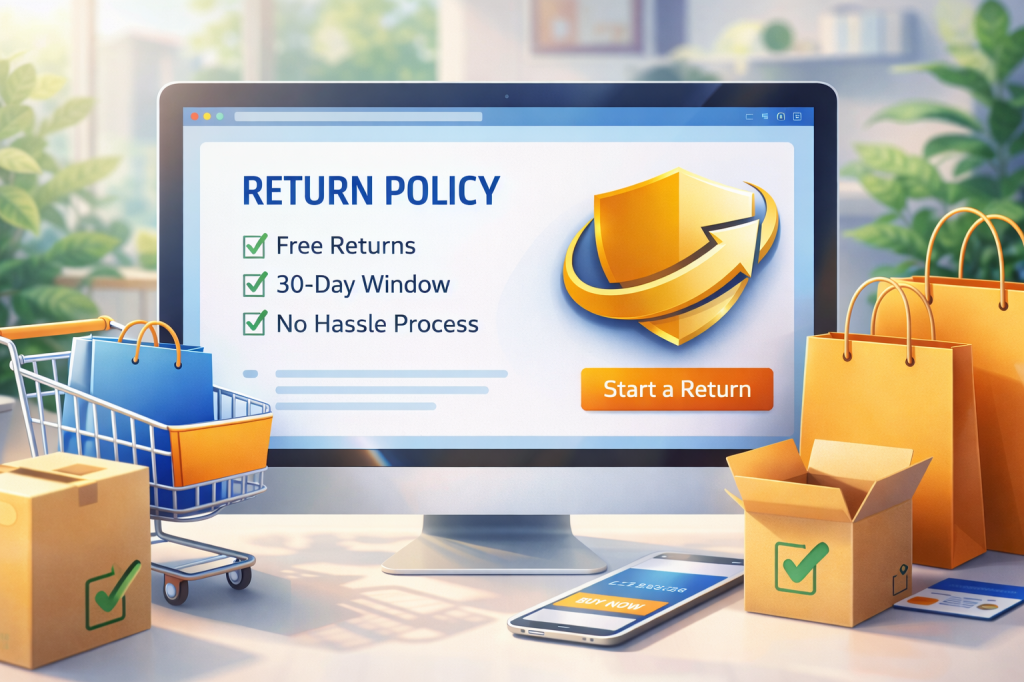
The fundamental barrier to any online sale is psychological risk. The customer parts with money for a promise, not a product. A generous, clear, and easy return policy is the ultimate form of risk reversal. It tells the customer, “Your confidence is our guarantee. If our promise falls short, we will make it right.”
This isn’t just feel-good theory; it’s behavioral economics in action. It transforms the purchasing decision from a calculation of potential loss into an invitation to experience. The brands that master this don’t just process returns; they engineer confidence, and confidence is the fuel of conversion.
Beyond the Fine Print: The Anatomy of a Tech-Powered Return Policy
This is where the vision meets the code. A transformative return policy isn’t about having the most lenient terms—it’s about having the most seamlessly integrated, transparent, and intelligent system. It’s a symphony of design, logic, and data that must be composed into your platform.
Let’s deconstruct the global gold standards:
- Amazon: Their dominance isn’t just about selection or speed; it’s about frictionless trust. The “return for any reason” policy is powerful, but the true magic is in the tech: pre-paid digital labels, one-click return initiation, instant refunds upon drop-off, and a tracking interface as clear as the purchase journey. They engineered the anxiety out of the process.
- Zappos: They built a billion-dollar brand on a radical premise: service as a software feature. Their legendary 365-day return policy was a marketing earthquake, but the operational miracle was the customer service portal and inventory systems that made it sustainable. They turned returns into a legendary customer service touchpoint.
What do these examples reveal? The policy is the promise. The technology is the fulfillment.
The Trust Stack: Building Your Return Policy as a Product Feature
For modern e-commerce, your return policy must be architected with the same care as your checkout flow. At Premium Media NG, we approach this through a framework we call “The Trust Stack” —three engineered layers that transform policy from text into a competitive advantage.
Layer 1: The Transparency Layer (Front-End Experience)
This is the user interface of trust. It’s not a hidden link in the footer.
- Dynamic Display: Is the policy summarized on product pages for high-consideration items? Does a badge like “Easy Returns” appear in the cart?
- Clarity as UX: Is the process explained in a clear, step-by-step visual flow? Are timelines and condition FAQs built as interactive guides, not static text?
- Tool Integration: Are size calculators, AR preview tools, or detailed material videos integrated to prevent returns by setting accurate expectations?
Layer 2: The Logic Layer (Back-End Engine)
This is the business logic and workflow that powers the promise.
- Automated Rule Engine: Can your platform automatically authorize returns based on product category, customer history, and reason, providing instant return labels?
- Unified Portal: Is there a dedicated, self-service customer portal where users can initiate, track, and manage returns alongside their order history?
- Operational Handoff: Does the system seamlessly notify logistics, update inventory (is it “restockable”?), and flag quality control issues—all without manual intervention?
Layer 3: The Intelligence Layer (Data & Insights)
This is where a cost center becomes a strategic brain.
- Predictive Analytics: Are you analyzing return reasons to identify defective suppliers, inaccurate product descriptions, or sizing issues?
- Customer Health Scoring: Can you segment customers based on return behavior? A loyal customer with a complex return might deserve white-glove service, while patterns of fraud can be flagged.
- Lifetime Value (LTV) Correlation: This is the ultimate metric. Your data systems should answer: Do customers who experience a smooth return process show higher LTV and repeat purchase rates? (Spoiler: The data overwhelmingly says yes).
The Premium Media NG Blueprint: From Policy to Platform
Building a “Trust Stack” isn’t about bolting on a third-party plugin. It’s about architecting it into the DNA of your e-commerce platform or customer portal from the ground up. This requires a partner who thinks like a strategist, designs like a psychologist, and builds like an engineer.
Our process involves:
- Discovery: Mapping your customer’s post-purchase anxiety points and your operational bottlenecks.
- Strategic Design: Co-creating the “Trust Stack” logic—defining the rules, user journeys, and data points that matter for your business.
- Agile Development: Building and integrating these features as core modules of your platform, ensuring scalability and a seamless user experience.
- Optimization: Using the generated data to continuously refine the policy, the process, and even the product offerings themselves.
Your Next Strategic Move: Audit Your Trust Architecture
Ask yourself these questions about your current digital commerce setup:
- Is our return policy a marketing asset we promote, or a legal document we hide?
- Is the return initiation process simpler than the checkout process?
- Do we have a centralized data view of why items are returned, and are we acting on it?
- Is our system designed to recover trust when a product fails, or just to process a transaction?
If these questions reveal gaps, your digital platform is leaving trust—and revenue—on the table.
Ready to engineer trust into your digital commerce foundation?
Book a “Trust Stack Audit” with our strategists. We’ll analyze your current platform’s capability to turn your return policy into your most powerful sales and retention tool. Let’s build systems that don’t just process transactions, but foster belief.
📞 Let’s talk: +234 806 041 8202
🌍 Visit: premiummediang.com
📲 DM us: @premiummediang
Myth vs. Reality: The Returns Dilemma
- Myth: “A generous return policy will bankrupt us with fraud and abuse.”
- Reality: Data shows abuse is marginal. The incremental sales from reduced purchase anxiety and increased customer loyalty from seamless returns far outweigh the costs. The real loss is the customer lost forever to a competitor who offered them confidence.
- Myth: “Returns are purely a logistics operation.”
- Reality: In digital commerce, the return journey is a core part of the customer experience. A negative return experience is more damaging to brand perception than a slow shipping time. It is a critical moment of truth that your technology must manage with empathy and efficiency.
#EcommerceStrategy #DigitalTrust #SaaS #ProductLedGrowth #CustomerExperience #TechLeadership #BusinessStrategy #ConversionRateOptimization #PremiumMediaNG
 Building Digital Excellence
Leave a comment