
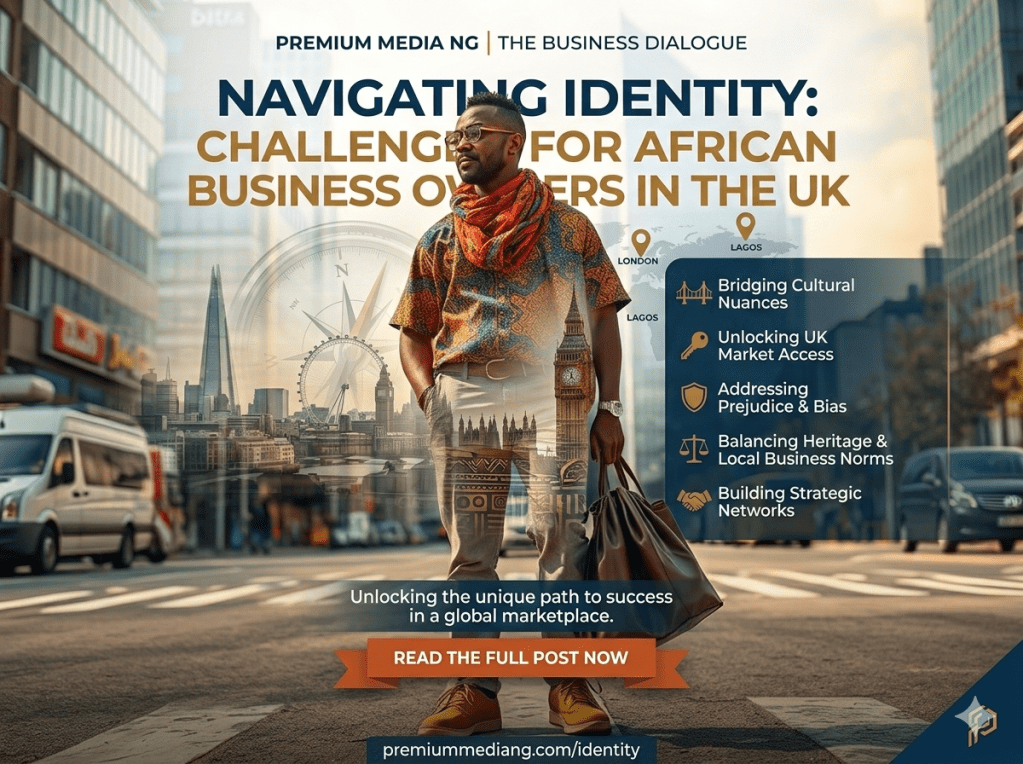
Stuck Between Two Worlds and Accepted by Neither: The 2026 Crisis Facing African Business Owners in the UK
“Too African for the mainstream. Not African enough for the diaspora.”
This is the sentence I hear most often when sitting down with African business owners across London, Manchester, and Birmingham in 2026.
They’re exhausted. Not from the work—but from the identity crisis their businesses are living through every single day.
Let me show you what I see.
The 2026 Identity Crisis
The average African business owner in the UK today faces a paradox:
Their products, services, and aesthetics are deeply African. That’s their edge. That’s what makes them different. That’s why customers notice them.
But their customer base? A complex mix of three distinct audiences:
1. The African Diaspora Craving Authenticity
First-generation Africans who remember the tastes, sounds, and feelings of home. They’re your most loyal customers—when you get it right. But they’re also your harshest critics. They know the difference between “authentic” and “adapted.” They can tell when you’ve watered down the spice to please others .
2. British Customers Curious About the Culture
The mainstream audience intrigued by African food, fashion, and experiences. They’re growing rapidly. The UK’s ethnic food segment is no longer “niche”—it’s a structural force reshaping the £230 billion FMCG landscape . But they need entry points that don’t overwhelm. They need translation without dilution.
3. Second-Generation Africans Reconnecting with Roots
Perhaps the most complex audience of all. They grew up in the UK, feel British, but sense something missing. They’re searching for connection to a heritage they never fully experienced. They want authenticity—but packaged in a way that feels accessible, not foreign .
Three audiences. Three sets of expectations. Three different definitions of “authentic.”
And the business owner? They’re trying to speak to all three at once.
The Result: A Brand That Pleases No One
When you try to be everything to everyone, you become nothing to anyone.
Here’s what happens:
Their Messaging Becomes Watered Down
To avoid alienating mainstream customers, they soften their language. To maintain credibility with the diaspora, they try to prove their authenticity. The result? Posts that say everything and nothing. Content that pleases algorithms but moves no one.
Their Brand Loses Its Distinctiveness
In a crowded market, the only thing that cuts through is clarity. When you try to appeal to everyone, your visual identity, tone, and positioning become generic. You start looking like every other brand—because you’ve sanded off all the edges that made you different.
They Compete on Price Instead of Perspective
When you can’t articulate why you’re different, the only thing left to compete on is price. And price wars are death sentences for small businesses. You can’t out-Amazon Amazon. But you can offer something Amazon never can: genuine cultural perspective.
They’re Caught in the Authenticity Trap
Here’s the cruel irony: The diaspora accuses them of being “too Westernized.” Mainstream customers find them “too foreign.” Second-generation Africans wonder if they’re “authentic enough” to help them reconnect .
They’re seen as too African for the mainstream. Not African enough for the diaspora. And caught in the middle, serving no one well.
They’re Constantly Code-Switching—and Exhausting Themselves
This is the hidden cost no one talks about. The mental load of constantly switching between audiences. Posting one thing on the diaspora-focused WhatsApp group, another on the mainstream Instagram feed. Explaining your products differently depending on who’s asking. It’s exhausting. And it’s unsustainable.
Voice Search Questions African UK Business Owners Are Asking
“How do I appeal to both African and British customers without losing authenticity?”
You don’t. You choose a primary audience and serve them so well that the others find you anyway. Vas Cuisine in London doesn’t try to please everyone. They make authentic Nigerian food—but they “dim it down so you don’t kill people with spice” . They’ve chosen a lane: serving both audiences by being unapologetically Nigerian while acknowledging their customers’ spice tolerance. It works.
“Should I target diaspora or mainstream customers first?”
Look at your strengths and your story. Payless Afro Market in London serves the diaspora first—providing ingredients Nigerians can’t find elsewhere. They’ve become a community hub where immigrants feel “safe and familiar” . By serving one audience exceptionally well, they’ve become indispensable.
“How do I reach second-generation Africans who want to reconnect?”
They’re searching for connection but don’t know where to start. Platforms like Kulturely are emerging precisely to bridge this gap—offering micro-experiences that let people access African culture through food, conversation, and shared moments rather than formal events . The key is invitation, not intimidation.
“What’s the biggest mistake African businesses make in the UK?”
Trying to be everything to everyone. The successful ones choose a lane and own it unapologetically. J.Kuttin, a London streetwear brand, positions itself as “African Inspired. London Designed.” They don’t apologize for being both. They celebrate it .
“Can I really succeed by focusing on just one audience?”
Look at the data. Taste Africana in Greater Manchester built a loyal following by serving authentic Nigerian food before tragedy struck. They weren’t trying to please everyone—they were serving their community exceptionally well . That’s the model.
Real Stories from the Front Line
Taste Africana: When Authenticity Meets Adversity
Bright and Cynthia Chinule opened Taste Africana, the first African restaurant in Leigh, Greater Manchester. Their food was authentic. Their vision was clear. Their community embraced them.
Then disaster struck. Three weeks after opening, part of the building collapsed. The council closed them down. They reopened months later on Market Street, but the financial damage was done.
Now they face deportation if they can’t raise £26,000 in days—visa fees, health surcharges that jumped from £300 to £1,800 per person, legal costs. A family of five, three British-born children, a business they’ve built over six years—all at risk .
This is the reality beneath the “identity crisis.” The stakes aren’t just branding. They’re survival.
Payless Afro Market: A Community Hub
When Movy Emovon wants a taste of home, he visits Payless Afro International Food Market in London. Goat meat you can’t find elsewhere. Nigerian spices. African sweet bread that would cause “a riot if any of that bread was out of stock.”
But Payless is more than a store. It’s where immigrants connect. Where stories are shared. Where people feel “safe and familiar” in a foreign land .
They didn’t achieve this by trying to please everyone. They achieved it by serving one community so well that community became their foundation.
J.Kuttin: Owning the In-Between
J.Kuttin launched as a London streetwear brand with a clear position: “African Inspired. London Designed.”
They’re not apologizing for the fusion. They’re celebrating it. Their logo features three peaks representing Mount Kilimanjaro, Mount Kenya, and Mount Stanley—a visual story of “helping Africans reach new heights” while being unmistakably London .
They chose a lane: African professionals who want both heritage and edge. And it’s working.
Kulturely: Creating New Categories
Daniel Iloh and Etoroma Genesis launched Kulturely in December 2025—a marketplace for African cultural micro-experiences. More than 1,480 people joined the waitlist before launch. Over 320 hosts are now onboarding across UK cities .
The insight? Africans in diaspora experience “cultural disconnection and a lack of spaces where they feel seen.” Meanwhile, interest in African culture is rising among non-Africans, but trusted ways to access authentic experiences remain limited.
Kulturely bridges this gap by letting Africans earn from “who they already are, without changing themselves to fit anyone else” .
They didn’t try to please everyone. They created a new category for people who felt unseen.
The Market Reality: Why This Matters Now
The opportunity for African businesses in the UK has never been bigger:
- £230 billion FMCG market being reshaped by ethnic segmentation
- 1.5 million Africans living in the UK, with deep diaspora connections
- 350 million global African diaspora, hungry for connection
- £134 billion UK experience economy, with growing demand for authentic cultural experiences
But opportunity without clarity is chaos.
The brands that will win in 2026 and beyond aren’t the ones trying to capture all of this. They’re the ones who understand that the next wave of growth will come from understanding how immigration, culture, and consumption intersect—and building strategy at that crossroads .
The PMNG Framework: Finding Your Lane
At Premium Media NG, we help African UK businesses move from identity crisis to strategic clarity. Here’s how:
Phase 1: Audience Selection
You cannot serve three masters. We help you analyze your strengths, your story, and your market to choose one primary audience:
- The Diaspora Seeker: First-generation Africans craving authentic connection
- The Culture Curious: Mainstream customers seeking entry points
- The Root Seeker: Second-generation Africans reconnecting with heritage
Each requires a completely different brand voice, content strategy, and customer experience. Choose one.
Phase 2: Unapologetic Positioning
Once you’ve chosen, we help you own it without apology. J.Kuttin doesn’t apologize for being both African and London. They celebrate it . Your brand should do the same.
We develop:
- A brand voice that speaks directly to your chosen audience
- Visual identity that signals who you’re for (and who you’re not)
- Messaging that repels the wrong customers and attracts the right ones
Phase 3: Integrated Systems
With clarity comes efficiency. We build marketing systems that:
- Attract your chosen audience across channels
- Nurture them with content that resonates with their specific definition of “authentic”
- Convert them into loyal customers who feel truly seen
- Create advocates who bring others like them
Phase 4: Measurement That Matters
We track what actually matters for your chosen audience:
- Diaspora loyalty and repeat rates
- Mainstream conversion and education metrics
- Second-generation engagement and reconnection depth
Not vanity metrics. Real business intelligence.
The Question Only You Can Answer
Here’s what I need you to consider:
If your business disappeared tomorrow, which audience would genuinely miss you?
Not which audience could have bought from you.
Not which audience might have discovered you eventually.
But which audience would feel a genuine hole in their lives because you’re gone?
Your answer to that question is your lane.
The diaspora that finally found authentic ingredients?
The mainstream customer who discovered Nigerian food through you?
The second-generation African who reconnected with their roots because of your welcome?
Choose one. Own it. Serve them so well that the others find you anyway.
Because in 2026, the businesses that win aren’t the ones trying to please everyone.
They’re the ones who finally choose a lane, own it unapologetically, and let the right customers find them.
Ready to Find Your Lane?
At Premium Media NG, we help African business owners across London, Manchester, Birmingham, and beyond move from identity crisis to strategic clarity.
We don’t just build websites or run ads. We build integrated marketing systems that help you attract your chosen audience, serve them exceptionally well, and build a business that stands for something.
Book your free 30-minute Lane Clarity Session today.
We’ll analyze your current positioning, identify which audience you’re best equipped to serve, and give you a roadmap to unapologetic clarity.
Want to start right now? DM us “LANE” on Instagram (@premiummediang) for our free “Audience Selection Worksheet”—five questions to help you choose who you’re really here to serve.
📞 Call us directly: +234 806 041 8202
We answer questions personally. No bots. No automated trees. Just real conversations with people who understand the unique challenge of being an African business owner in the UK.
Frequently Asked Questions
“Can’t I serve multiple audiences with different content?”
You can—once you’ve established a core audience. Start with one. Serve them so well they become your advocates. Then, and only then, consider expanding. Trying to serve multiple audiences from day one is how brands become generic.
“What if my product genuinely appeals to everyone?”
Your product might. Your brand shouldn’t. Nike sells to everyone, but their brand speaks differently to athletes, fashion consumers, and casual wearers. The product is the same. The positioning isn’t.
“How do I reach second-generation Africans specifically?”
They’re searching for connection but often don’t know how to ask. Create content that invites, not intimidates. Use language that welcomes questions. Build experiences that let them participate at their own comfort level .
“What about London, Manchester, and Birmingham specifically?”
Each city has its own diaspora dynamics. London’s African population is massive and diverse. Manchester has strong West African communities. Birmingham’s demographics are shifting rapidly. We help you optimize for your specific location.
“How is this different from regular branding advice?”
Regular branding advice tells you to “find your voice.” We help you find your audience first. Voice follows audience. Get that right, and everything else becomes easier.
Real Transformation: What Clarity Looks Like
The Restaurant (Manchester)
Before: Trying to appeal to everyone with “African fusion” that pleased no one
After: Unapologetically Nigerian, with clear guidance for mainstream customers
Result: Doubled revenue, rave reviews, waiting lists every weekend
The Fashion Brand (London)
Before: Generic “African-inspired” messaging that blended into the background
After: “African Inspired. London Designed” positioning that celebrates the fusion
Result: Featured in Vogue, international wholesale accounts, cult following
The Food Market (Birmingham)
Before: Trying to compete on price with mainstream grocers
After: Community hub for diaspora, with events, connections, and belonging
Result: Loyal customers who drive 45 minutes because “there’s nowhere else like it”
Premium Media NG: Where Identity Meets Strategy.
📞 +234 806 041 8202 | 🌍 premiummediang.com | 📲 @premiummediang
#AfricanBusinessUK #DiasporaEntrepreneur #BrandStrategy #NigerianBusinessUK #LondonBusiness #ManchesterBusiness #BirminghamBusiness #PremiumMediaNG
 Building Digital Excellence
Leave a comment