
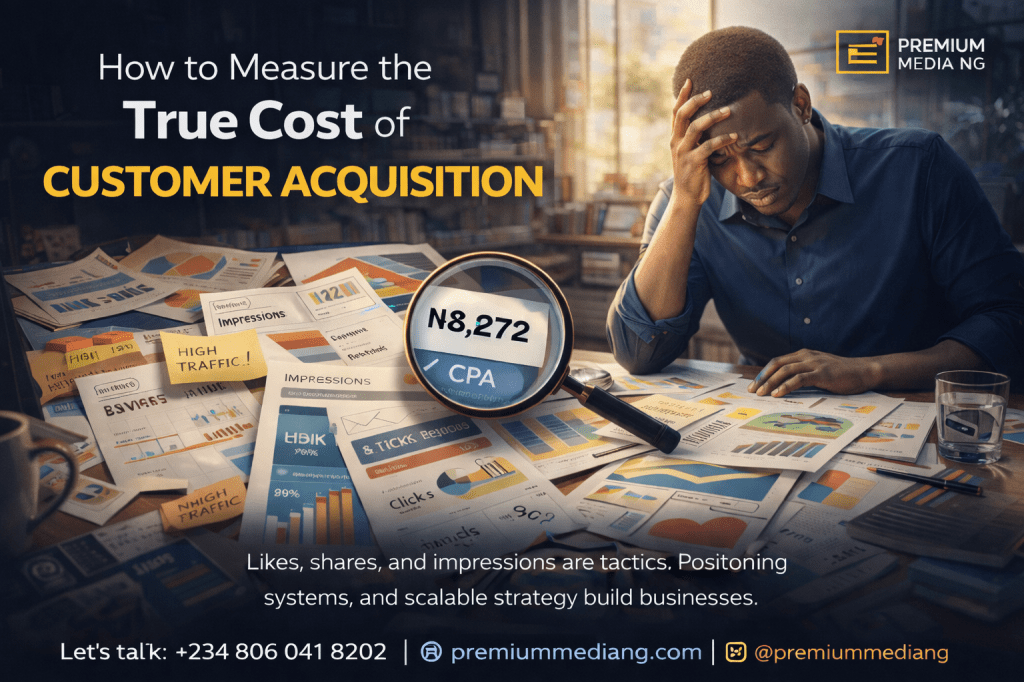
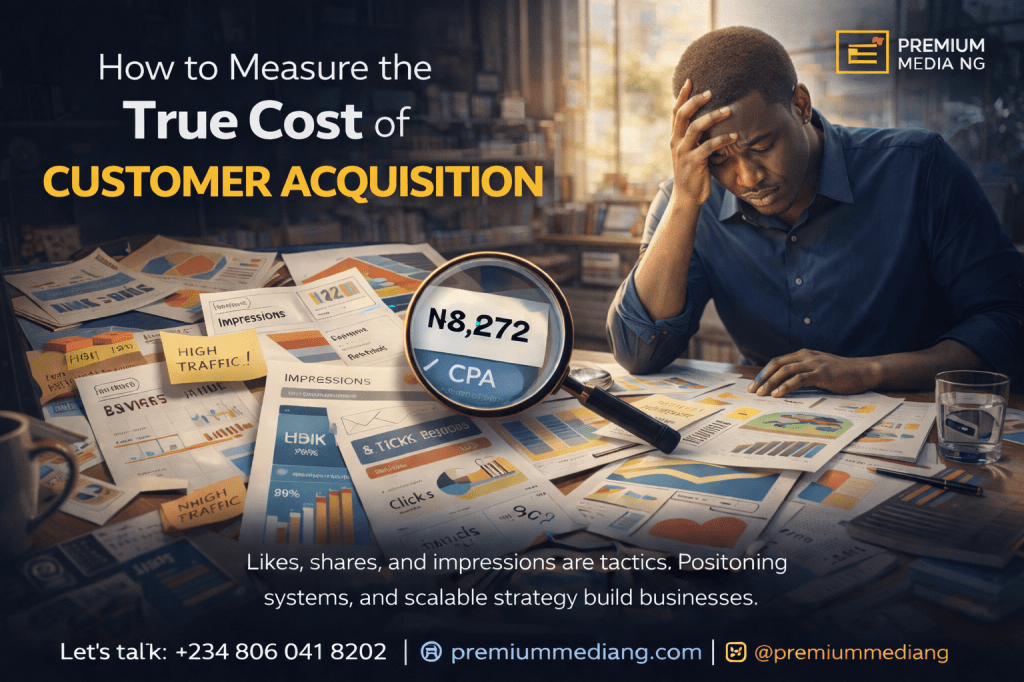
The One Metric Your Agency Is Hiding From You
Why Most Marketing Reports Are Designed to Impress You, Not Inform You
Let me tell you something that might make some of my colleagues uncomfortable.
Your agency’s monthly report is probably designed to hide the truth.
Not maliciously. Not intentionally. But by design.
Because the metrics they’re showing you? The ones they celebrate in colorful charts and celebratory emails?
They’re almost never the ones that actually matter.
And there’s one metric in particular—the most important one—that almost no agency wants you to track.
The Metric That Changes Everything
Here it is:
Cost Per Acquisition (CPA).
Not impressions.
Not reach.
Not followers.
Not even engagement.
Cost Per Acquisition.
How much does it actually cost you to acquire a paying customer?
Not a lead.
Not a click.
Not a “highly engaged user.”
A person who gives you money.
Why Agencies Hide This Metric
I’ve been in this industry for over a decade. I’ve seen the internal conversations. I’ve watched agencies celebrate “successful campaigns” that were actually losing their clients money.
Here’s why it happens:
1. Attribution Is Hard
Tracking CPA requires connecting marketing spend to actual sales. That means integrating your ad platforms with your payment systems, your CRM, your analytics.
Most agencies don’t have the technical capability to do this properly. Or they don’t want to invest the time.
So they show you what’s easy to measure instead of what’s important to know.
2. Accountability Is Uncomfortable
If an agency shows you CPA, they’re putting a number on their performance.
“If you spend ₦100,000 on ads and acquire 10 customers, your CPA is ₦10,000.”
That’s concrete. That’s measurable. That’s accountable.
Most agencies prefer metrics that can’t be directly tied to your bottom line.
3. Short-Term Thinking Wins
Agencies are often evaluated on month-to-month performance. CPA optimization takes time. It requires testing. It requires patience.
Showing impressive “reach” numbers is easy. Showing improving CPA over time is hard work.
So they take the easy path.
4. They Don’t Actually Know
This is the uncomfortable truth.
Many agencies don’t know your CPA because they’ve never asked for access to your sales data. They run campaigns in isolation, measuring only what happens on their platforms.
What happens after someone clicks? They have no idea.
They’re flying blind—and taking your money with them.
What Happens When You Ignore CPA
Let me show you what this looks like in practice:
The Lagos E-commerce Brand
They spent ₦2.5M on Facebook ads over six months. Their agency celebrated:
- 450,000 reach
- 12,000 link clicks
- 8% engagement rate
- 2,500 new followers
Beautiful reports. Happy meetings.
Then they asked us to take a look.
We connected their ad account to their sales data.
The truth:
Those 12,000 clicks produced 47 actual purchases.
Total revenue: ₦1.8M.
Cost per acquisition: ₦53,191.
They lost ₦700,000.
Their agency wasn’t lying. They just weren’t looking at the right numbers.
And the business owner—busy running operations, trusting the experts—had no idea.
The Components of True CPA
When you understand CPA, you understand your entire business.
Because CPA breaks down into:
Customer Acquisition Cost (CAC)
The total cost of convincing a customer to buy your product or service. This includes ad spend, creative production, tools, and team time.
Cost Per Click (CPC)
How much you pay each time someone clicks your ad. Low CPC means nothing if those clicks don’t convert.
Conversion Rate (CR)
The percentage of people who take the desired action (purchase, sign-up, booking). This is where most businesses leak money.
Customer Lifetime Value (LTV)
How much a customer is worth over their entire relationship with you. If your CPA is higher than your LTV, you’re losing money on every customer.
These numbers together tell the real story of your business.
Voice Search Questions Business Owners Are Asking
“What’s the most important metric in digital marketing?”
Cost Per Acquisition (CPA). How much does it actually cost you to acquire a paying customer? Every other metric is just a step toward answering that question.
“How do I calculate my true cost per acquisition?”
Divide your total marketing spend by the number of customers acquired. But make sure you’re counting all spend—ads, tools, agency fees, creative production. And make sure you’re tracking customers, not just leads.
“Why does my agency not track CPA?”
Because it’s hard, because it holds them accountable, and because many don’t have access to your sales data. A good agency will ask for that access. A great agency will demand it.
“What’s a good CPA for my business?”
Lower than your average customer lifetime value. If you make ₦50,000 profit per customer, your CPA needs to be less than that. The exact number depends on your margins, your industry, and your business model.
**”How can I lower my cost per acquisition?””
Improve your targeting, optimize your conversion rate, test different creative, nurture leads better, and—most importantly—track everything so you know what’s actually working.
The PMNG Approach: Truth Over Vanity
At Premium Media NG, we do things differently.
Not because we’re more ethical (though we try to be).
Not because we’re better people (debatable).
Because we’re software developers who became marketers.
Our background means:
✅ We build systems that connect marketing spend to sales data automatically
✅ We create dashboards that show CPA in real-time, not weeks later
✅ We optimize for what matters—revenue—not what’s easy—likes
✅ We have uncomfortable conversations when your CPA is too high
✅ We celebrate when your numbers improve, not when our reports look pretty
What we refuse to do:
❌ Send you reports filled with vanity metrics
❌ Celebrate campaigns that lose you money
❌ Hide behind attribution complexity
❌ Pretend we know what we can’t measure
Real Stories: What Happens When You Track CPA
The Abuja Service Business
Before: Spending ₦1.2M monthly on ads. Agency reported 300+ leads monthly. Owner was happy.
The Truth: Only 12 of those “leads” actually booked consultations. Only 4 became clients. CPA: ₦300,000 per client. Average client value: ₦250,000.
They were losing ₦50,000 on every client.
After: We rebuilt their tracking, optimized for actual consultations, improved their nurture sequence.
Result: CPA dropped to ₦85,000. Client value stayed the same. Profitability transformed overnight.
The Lagos E-commerce Store
Before: Running promotions constantly. Celebrating sales spikes. No idea which campaigns actually worked.
The Truth: Flash sales were acquiring customers who never bought again. Educational content was acquiring customers who became loyal. But they couldn’t tell the difference.
After: We connected their ad platform to their customer database. Tracked LTV by acquisition source.
Result: Shifted budget to content. CPA went up slightly in the short term, but LTV tripled. True profitability soared.
The Port Harcourt Restaurant Chain
Before: Posting daily on Instagram. Measuring likes and comments. Wondering why foot traffic wasn’t growing.
The Truth: Their social media was reaching people 30km away who would never visit. Their actual customers weren’t on Instagram—they were on WhatsApp.
After: We tracked actual redemptions of online promotions. Discovered their true CPA by channel.
Result: Stopped Instagram entirely. Focused on WhatsApp marketing. CPA dropped 70%. Foot traffic increased 40%.
The 2026 Reality: You Can’t Afford Vanity Metrics
We’re in 2026. Marketing costs are higher than ever. Competition is fiercer. Attention is scarcer.
You literally cannot afford to measure the wrong things.
Every naira spent on marketing that doesn’t result in a customer is a naira that could have been spent on:
- Product development
- Team salaries
- Better customer service
- Your own peace of mind
Vanity metrics are a luxury only profitable businesses can afford.
And if your agency isn’t showing you CPA, you’re not profitable—you’re just busy.
The Questions Your Agency Should Answer
If your agency sent you a report today, ask them:
- “What was our cost per acquisition last month?”
- “How does that compare to our customer lifetime value?”
- “Which channels have the lowest CPA?”
- “Which campaigns have the highest CPA?”
- “What are we doing to improve both?”
If they can’t answer these questions clearly, with data, you have a problem.
If they can, you have a partner.
How to Start Tracking CPA Today
You don’t need to wait for your agency to change. You can start tracking CPA yourself.
Step 1: Define “Acquisition”
What counts as a customer?
- First purchase?
- First paid subscription?
- First consultation booking?
- Something else?
Be clear. Be consistent.
Step 2: Track Your Spend
All of it:
- Ad platform costs
- Agency fees
- Creative production
- Tools and software
- Team time spent on marketing
Step 3: Connect the Dots
This is the hard part. You need to know which customers came from which channels.
Tools like:
- Facebook Pixel with purchase tracking
- Google Analytics with e-commerce tracking
- UTM parameters on every campaign
- CRM that captures source data
Step 4: Calculate
Total marketing spend ÷ Number of customers acquired = CPA
Do this by channel. By campaign. By month.
Watch the trends. Act on the insights.
The PMNG Solution: Built-In CPA Tracking
This is where we’re different.
Because we’re a software development company that also does marketing, we don’t just run campaigns—we build the systems to measure them.
Every PMNG engagement includes:
✅ Custom tracking setup – We connect your ad platforms to your sales data
✅ CPA dashboards – Real-time visibility into what matters
✅ Attribution modeling – Know which channels actually deliver customers
✅ LTV tracking – Not just first purchase, but full customer value
✅ Regular optimization – We don’t just report on CPA, we improve it
You never have to wonder if your marketing is working.
You’ll know.
Serving Business Owners Across Nigeria and Beyond
In Lagos: We help fast-growing companies scale profitably. High growth doesn’t have to mean high waste.
In Abuja: We work with service-based businesses where customer relationships are everything. We track CPA through long sales cycles.
In Port Harcourt: We support businesses expanding their reach while maintaining profitability. Growth without margin is just expensive charity.
In London and Beyond: We help diaspora businesses navigate complex markets with clear metrics. No confusion. Just truth.
The Question Only You Can Answer
Here’s what I need you to consider:
If your marketing disappeared tomorrow, how would you know what you lost?
Not in followers.
Not in engagement.
In actual customers. In actual revenue.
If you can’t answer that question with confidence, your agency is hiding something from you.
Maybe intentionally. Maybe not.
But the result is the same: you’re flying blind.
Ready to See the Truth?
At Premium Media NG, we don’t just run marketing—we build systems that show you exactly what’s working and what’s not.
We’re selective about who we work with. But if you’re ready to move beyond vanity metrics and start measuring what matters…
Let’s talk.
Book your free Truth in Marketing Audit today.
We’ll analyze your current tracking, identify what you’re missing, and show you your true CPA—whether you’ve been working with us or not.
No obligation. No pressure. Just the truth.
Want to start now? DM us “TRUTH” on Instagram (@premiummediang) for our free “CPA Tracking Checklist”—five steps to start measuring what matters today.
📞 Call us directly: +234 806 041 8202
We answer questions personally. No bots. No automated trees. Just real conversations with people who believe marketing should be measured by revenue, not reach.
Frequently Asked Questions
“What if my agency refuses to share CPA data?”
That’s a red flag. A good partner wants you to have this information. If they’re resistant, ask why. If the answer isn’t satisfactory, it might be time to look elsewhere.
“What’s a good CPA benchmark?”
It varies wildly by industry. A low-ticket e-commerce item might have a CPA of ₦1,000-₦5,000. A high-ticket B2B service might have a CPA of ₦200,000+. The key is comparing CPA to customer lifetime value. If your LTV is 3x your CPA, you’re in good shape.
**”How often should I track CPA?””
Monthly at minimum. Weekly if you’re running significant ad spend. Daily if you’re optimizing aggressively. The more you track, the faster you can improve.
“Can I track CPA without expensive tools?”
Yes. Start with a simple spreadsheet. Track spend by channel. Track customers by source. Calculate manually. It’s better than nothing. But as you scale, invest in proper tracking.
“What if my CPA is too high?”
First, don’t panic. Then, diagnose. Is your targeting too broad? Is your conversion rate too low? Is your offer not compelling enough? Each problem has a solution. The key is knowing which problem you have.
Real Results: What Truth Looks Like
The Lagos FinTech
Before: Spending ₦5M monthly, celebrating user sign-ups, wondering why retention was low
After: CPA tracking revealed they were acquiring the wrong users. Shifted strategy.
Result: CPA increased 20% short-term, but LTV increased 300%. True profitability soared.
The Abuja Law Firm
Before: Running general brand awareness, couldn’t track where clients came from
After: Implemented full CPA tracking by channel
Result: Discovered 80% of their best clients came from one specific content type. Doubled down. Revenue up 150%.
The Port Harcourt Restaurant
Before: Posting daily, measuring likes, wondering why traffic was flat
After: Tracked actual redemptions, discovered true CPA by channel
Result: Stopped Instagram entirely. Focused on WhatsApp. CPA down 70%. Revenue up 40%.
Premium Media NG: Where Marketing Meets Truth.
📞 +234 806 041 8202 | 🌍 premiummediang.com | 📲 @premiummediang
#MarketingMetrics #CostPerAcquisition #NigerianBusiness #LagosBusiness #AbujaBusiness #PortHarcourt #DigitalMarketingTruth #PremiumMediaNG
 Building Digital Excellence
Leave a comment