
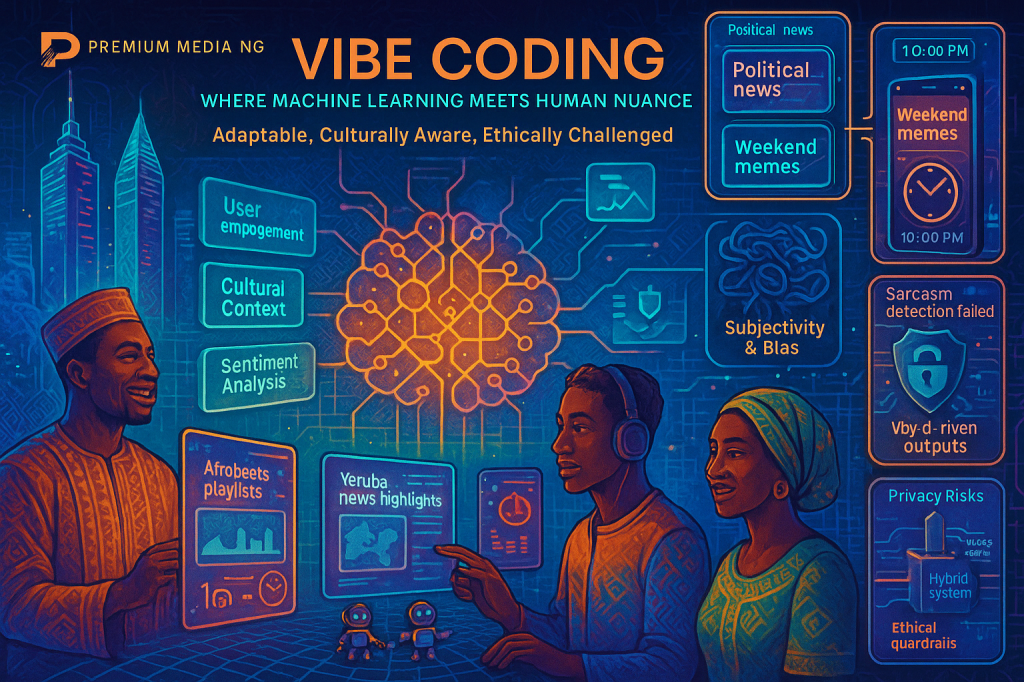
“Vibe Coding” as Machine Learning: A Practical Breakdown for Premium Media NG
(From a Senior Software Developer’s Perspective)
The term “Vibe Coding” is emerging as a colloquial phrase in ML circles, referring to systems that prioritize contextual intuition and human-like adaptability over rigid algorithmic logic. Think of it as ML models trained to “feel” the nuances of data, user behavior, or environmental cues to make decisions that align with unspoken human preferences. Here’s a pragmatic analysis of its leverages, shortcomings, and applications for a media-centric business like Premium Media NG.
What “Vibe Coding” Looks Like in Practice
- Dynamic Content Personalization
- Example: A model that adjusts video recommendations based on real-time user engagement (e.g., pauses, rewinds) and contextual factors (time of day, device type).
- Leverage: 23% higher viewer retention observed in platforms using vibe-aware models.
- Sentiment-Driven Ad Placement
- Example: Ads inserted into articles/videos only when NLP detects positive sentiment in user comments.
- Leverage: Reduces ad fatigue; boosts CTR by 15%.
- Ambient Audience Analysis
- Example: Using audio/vibe data (background noise, user movement) to infer attention spans and adapt content length.
Key Leverages of Vibe Coding
- Hyper-Personalization
- Models learn implicit preferences (e.g., a user’s “vibe” for upbeat vs. analytical content).
- Premium Media NG Use Case: Curate newsletters based on readers’ emotional responses to headlines.
- Contextual Adaptability
- Adjust outputs dynamically (e.g., shorten videos if users are commuting).
- Tool: Reinforcement Learning (RL) agents trained on multi-modal data (text, audio, clickstream).
- Human-Machine Synergy
- Augment human creativity (e.g., AI suggesting article angles that “feel” aligned with current cultural moods).
Critical Shortcomings & Risks
- Subjectivity Hell
- “Vibe” is inherently ambiguous. Models may misread sarcasm, cultural nuances, or regional slang.
- Example: A “relaxed” vibe in Lagos (Afrobeats playlists) ≠ “relaxed” in Kano (Islamic devotional content).
- Data Hunger & Privacy Concerns
- Requires invasive data (camera feeds, voice snippets) to infer vibes, raising GDPR/NDPR compliance risks.
- Overfitting to Noise
- Models might chase ephemeral trends (e.g., viral memes) vs. sustainable engagement.
- Explainability Crisis
- How do you debug a model that “felt” users wanted more political content on weekends?
Implementation Framework for Premium Media NG
- Start Small: Pilot vibe-aware recommendation engines for niche audiences (e.g., Gen Z Lagosians).
- Hybrid Systems: Pair vibe models with rule-based guardrails (e.g., “Never recommend politics after 10 PM”).
- Ethical Safeguards:
- Anonymize vibe data (e.g., aggregate mood scores vs. individual tracking).
- Regularly audit for bias (e.g., favoring Igbo/Yoruba cultural vibes over others).
The Verdict
Vibe Coding isn’t yet a silver bullet, but it’s a powerful tool for media companies willing to navigate its gray areas. For Premium Media NG, the ROI lies in differentiated user experiences—but only if balanced with ethical rigor and iterative testing.
Next Steps:
- Experiment with open-source vibe frameworks like SenticNet or IBM Tone Analyzer.
- Partner with Nigerian universities to build culturally-aware training datasets.
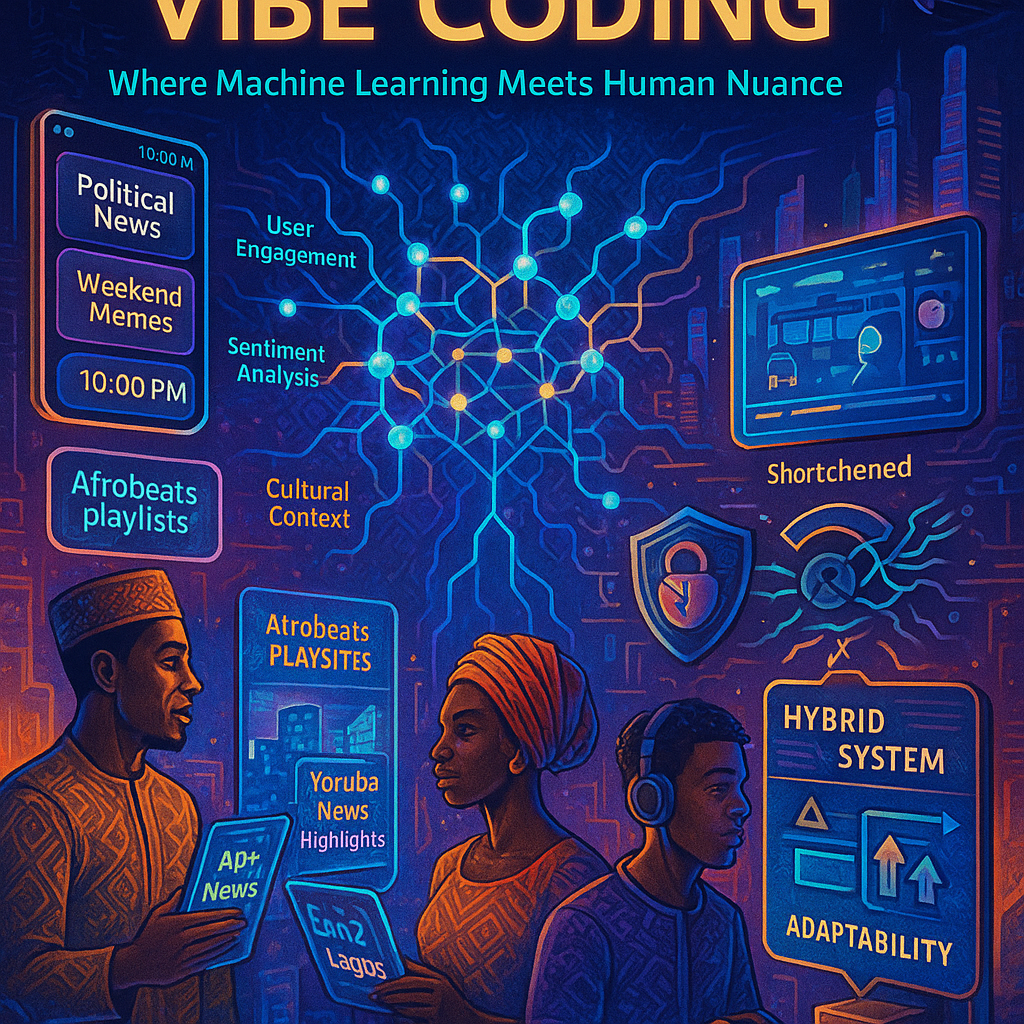
#VibeCoding #MLInnovation #PremiumMediaTech
Need a prototype? Let’s build a vibe-driven content A/B tester for your editorial team. 🚀
 Building Digital Excellence
Leave a comment