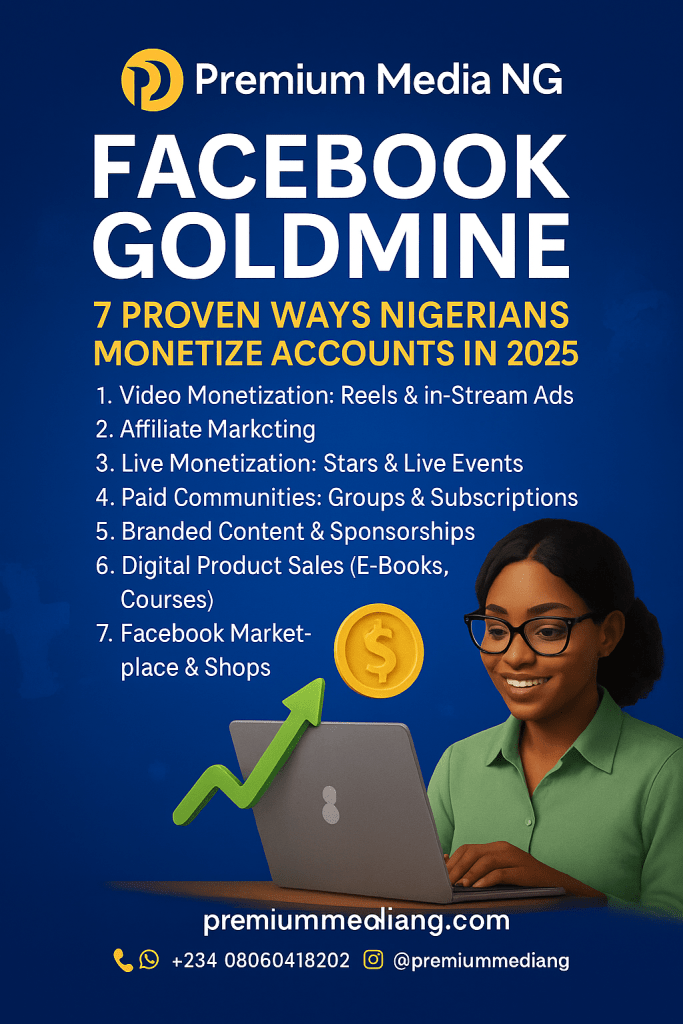
Facebook Goldmine: 7 Proven Ways Nigerians Monetize Accounts in 2025
Nigeria is one of Facebook’s largest markets – as of January 2024 it had nearly 50 million users (about 21% of the population). With people spending hours per day on the platform, Facebook offers many income streams for Nigerian entrepreneurs, influencers and freelancers. Since mid-2024, Meta has opened up programs like Ads on Facebook Reels and In-Stream Video Ads to Nigerian creators. By meeting eligibility (typically ≥5,000 followers and sufficient video watch-time), a Nigerian Page or creator can activate ads on videos and reels. For example, Meta promises creators can earn up to ₦150,000 per 10,000 views under its new ads programs. In practice this means Nigerian pages with original content can turn viral Reels or uploads into steady ad revenue. (Meta notes these features run through August 2025 and will soon be unified under a new “Content Monetization” program.)
1. Video Monetization: Reels & In-Stream Ads
Creating short, engaging videos or live broadcasts is one of the fastest ways to earn on Facebook. In July 2024, Meta launched In-Stream Ads (pre-roll/mid-roll/post-roll ads on videos) and Ads on Facebook Reels for Nigeria. Once approved, creators earn a share of ad revenue based on performance. Key requirements include:
- Page size: At least 5,000 followers and 600,000 total minutes of video watched in 60 days.
- Content standards: Originals only (no reused clips) and compliance with Facebook’s Partner Monetization Policies.
- Age: Creators must be 18+.
Key points:
- Potential payouts: Meta has cited figures like ₦150k for every 10,000 video views. While actual earnings vary, top Nigerian creators report “millions of views and substantial income” from these programs.
- Ad formats: Videos can include pre-roll, mid-roll or post-roll ads and image ads beneath content. Reels ads are short video ads that blend into Reels and pay based on views.
- Local success: Creators like Lagos-based comedians use these tools effectively – e.g. Maraji’s music videos and Ikorodu Bois’ movie-parody reels have attracted ad revenue and brand deals.
By regularly posting engaging Reels or longer videos on your Facebook Page, you can monetize each view. Track your Monetization Manager dashboard for eligibility and payout details.
2. Affiliate Marketing
Facebook’s massive reach makes it ideal for affiliate marketers. Nigerians can partner with e-commerce and service brands to earn commissions by promoting products on their Facebook pages, groups or even personal feeds. In fact, with roughly 33 million Nigerian Facebook users, the platform has the continent’s largest affiliate audience.
Strategies for affiliates:
- Link sharing: Post affiliate links in updates or profiles. Many affiliates simply share deals in niche Facebook Groups (e.g. fashion, electronics, travel). Joining or creating a Facebook Group around a product category and sharing your link can generate passive income.
- Facebook Ads: Use paid ads to target relevant demographics. Running low-budget Facebook ads to click affiliate links (e.g. to Jumia, Konga, Amazon products) can boost sales and commissions. For example, fashion influencers often run ads linking to Naira-based affiliate stores.
- Page branding: Maintain a dedicated Facebook Page for a niche (e.g. fitness, tech gadgets) and regularly post affiliate offers. Having a branded page lends credibility when sharing sponsored affiliate posts.
The payout model is commission-based: when a follower clicks your link and makes a purchase, you earn a percentage. Popular Nigerian affiliate programs include Jumia and Konga (with cash-back for referrals) and global ones like Amazon and ClickBank (paid in USD). By blending affiliate links into engaging posts (images, reviews, how-to videos), many Nigerian influencers supplement their income. As [32] notes, Facebook’s reach means “one of the most powerful affiliate platforms” in Nigeria.
3. Live Monetization: Facebook Stars & Live Events
Facebook Stars allows viewers to tip creators during live videos and Reels. Fans purchase virtual Stars (each about $0.01) and send them in real time; Facebook converts each star into earnings for the creator. While Stars isn’t yet widely rolled out in Nigeria, it’s worth understanding for future rollout.
- How it works: During a live broadcast, viewers can tap a “Send Stars” button. Every star (worth ~$0.01) contributes to your revenue (Facebook pays out monthly).
- Requirements: Globally, you need a small following (often just 50–100 fans), and must be streaming from a Page or profile eligible for stars. You must comply with content policies and regional availability.
- Income potential: Engaging streamers can earn hundreds of dollars per stream. (For example, Nigerians have reported cases like “Maraji Music earned millions of views and substantial income from Facebook Stars”.)
Current status: As of 2025, Nigeria’s eligibility for Stars is unofficial. Many Nigerian creators “are not yet eligible” for Stars monetization (they have spotted the option but find it blocked). Meta has hinted that eligibility will expand, so keep an eye on official updates. In the meantime, planning content (e.g. game streams, Q&As, performances) that would do well with fan tips can position you to benefit once Stars are enabled.
4. Paid Communities: Groups & Subscriptions
Building a community on Facebook can be lucrative. You can charge fans directly for access to exclusive content. Two key methods are paid Facebook Groups and Fan Subscriptions:
- Paid Facebook Groups: Create a private group around a specialty (e.g. advanced marketing, wellness coaching, or members-only fan clubs) and set a monthly membership fee. For example, a digital marketing coach might charge ₦1,000/month for an “Insider Marketers” group that offers weekly webinars and direct Q&A access. Facebook even supports group subscriptions in some markets. Key tips: offer high-value perks (training, insider tips), foster engagement, and deliver consistent exclusive content. As Monetag explains, you can “introduce high-value content” and “charge membership fees to access a premium group”.
- Fan (Page) Subscriptions: This is like Patreon on Facebook. If eligible, you invite your followers to subscribe monthly for badges and perks (extra posts, videos, behind-the-scenes). Meta calls this Fan Subscriptions. Requirements often include having a public Page with several thousand followers and meeting Facebook’s content criteria. In practice, you might set a ₦500–₦2,000 monthly fee for subscribers who get special badges and access to subscriber-only Lives or content. NigeriaBusinessPro notes that subscriptions are “usually invite-only but worth aiming for”.
Whether via a paid Group or Fan Subscription, the key is to offer real value to paying members. Use Facebook’s tools to manage payments and content distribution. This recurring revenue model is especially attractive to Nigerian creators with loyal fanbases.
5. Branded Content & Sponsorships
Influencers and Pages with large followings can collaborate with brands for sponsored posts or product placements. Facebook’s Branded Content tool lets you tag partner brands and comply with ad policies. In Nigeria, many SMEs and global brands pay popular pages to promote products.
- How it works: When you create a sponsored post for a brand (e.g. fashion outfit, smartphone review), you use the branded content tag so Facebook knows it’s an ad. The page or influencer then earns a flat fee negotiated with the brand. Payouts vary widely: some Nigerian micro-influencers earn ₦20,000–₦100,000 per branded post, while top creators command much more.
- Examples: Nigeria’s comedy and entertainment pages illustrate this well. For instance, Mark Angel Comedy (10M+ followers) and Ikorodu Bois have parlayed their viral videos into “successful brand partnerships and sponsorships”. They feature brands in skits or dedicated posts, leveraging their massive reach. Local celebrities and even SMEs (beauty salons, online stores) frequently sponsor content by Facebook creators.
- Tips: To attract sponsors, focus on growing an engaged audience in a niche (fashion, tech, wellness, etc.). Regularly use Facebook’s Branded Content tools so partners can see your metrics. Track engagement and present case studies (e.g. “last month’s campaign reached 500,000 views”) when pitching brands.
Branded content requires transparency and compliance, but it’s a proven way for Nigerian creators to earn per post – essentially paid promotions for their community.
6. Digital Product Sales (E-Books, Courses, etc.)
Facebook isn’t just for sharing; it’s also a storefront for digital goods. Nigerian experts and entrepreneurs often sell downloadable products directly to their followers: think e-books, templates, photo filters, webinar access or online courses. This model has minimal overhead and high margins. As one guide notes, “selling digital goods on Facebook can be a solid platform” with no shipping costs.
- What to sell: If you have knowledge or creative assets, package them. For example, sell language-learning e-books, business plan templates, fitness meal plans, photo presets, or even online courses via a hosted LMS.
- How to sell: Promote digital products on your Facebook Page or in Groups. You can post a “Buy Now” link (to a payment page or download delivery system) or use Facebook Shops (which also supports digital products). Alternatively, use live videos to demo your digital product and drop the link in the comments or description.
- Nigerian examples: Many local freelancers market online courses and guides on Facebook. For instance, a tech educator might sell a “Facebook Ads Masterclass” PDF, or a chef might sell downloadable recipe packs. Because followers trust your page, they’re more likely to purchase digital offerings you recommend.
With instant delivery (via email or messenger), this strategy turns your Facebook audience into customers for information products. It’s especially popular among remote workers and solopreneurs (e.g. consultants, coaches, designers) in Nigeria who have niche expertise to sell.
7. Facebook Marketplace & Shops (Physical Goods)
Finally, Facebook’s e-commerce features let Nigerians sell tangible products. Facebook Marketplace is a massive, local classifieds hub (used by millions) where you can list anything from gadgets to homeware. Additionally, Facebook Shops enables SMEs to set up a mini-store on their Page.
- Marketplace sales: Post used or new goods on Marketplace with clear photos and prices. A small Lagos boutique, for example, could list its fabrics, gadgets or clothing on Marketplace, reaching nearby buyers. This requires no ad spend – interested buyers message you directly. Many Nigerian sellers (electronics sellers, artisans, auto parts dealers) use Marketplace every day.
- Facebook Shops: If you run a Page for your business, create a Shop section (especially if you have many items). You upload your product catalog (photos, prices) and even link a checkout site (or use Facebook’s checkout where available). In 2024, Meta emphasized Shops as a channel for commerce: “Facebook Shops lets you set up a store directly on your page” to “display and sell physical products”. Nigerian SMEs use Shops to sell everything from custom T-shirts to homemade foods.
- Best practices: Use high-quality images and detailed descriptions. Promote your Shop/Marketplace listings with boosted posts or ad campaigns when you can. Link your Shop in posts and Stories (“Tap to buy”). For example, a Nigerian clothing brand might post a Reel wearing its outfits and link to its Facebook Shop for direct purchase.
Facebook’s commerce tools effectively turn your Page into an online store. Given the large Nigerian user base, a well-promoted product can reach thousands of potential buyers. Always provide good customer service and use local payment options (e.g. Paystack, Interswitch) to facilitate sales.
Bonus: Nigeria-Specific Updates & Tips
Meta has been rolling out more support for African creators. In 2024, Facebook announced that Nigerian and Ghanaian creators with 5,000+ followers could earn on Reels and videos. Keep an eye on Meta’s news: for example, by late 2024 Facebook began beta-testing a unified monetization program for all content (merging in-stream ads, Reels bonuses, etc.) – this should further simplify earning. Also note Facebook’s eligibility checks: regularly verify your Page in Meta’s Monetization Manager to ensure you meet updated rules. For all methods above, adherence to Facebook’s policies (original content, no hate speech, etc.) is mandatory.
By combining these seven strategies – from ad revenue and affiliate sales to community subscriptions and direct commerce – Nigerian small business owners, influencers and freelancers can unlock the “Facebook Goldmine” in 2025. Each strategy can stand alone or be mixed: for instance, a blogger might earn from in-stream ads on videos and sell an e-book. We recommend choosing the mix that fits your brand and audience, testing different approaches, and watching which yields the best results.
Key takeaways: Nigerians have unprecedented access to Facebook monetization tools. Learn the requirements for each (audience size, content type, etc.), build consistent, engaging content, and experiment with these income streams. Track performance in Meta’s analytics, refine your strategy, and consider cross-promoting on Instagram or WhatsApp to broaden reach.
Sources: Facebook and Meta news releases and industry reports provide the basis for the above strategies.
DigitalMarketingMastery #StorytellingWins #PremiumMediaNG #DigitalMarketing #DigitalAgency #MarketingInnovation #FutureOfMarketing #GrowthMarketing #UnlockYourGrowth #DigitalTransformation #MarketingExcellence #StrategicMarketing #YourDigitalPartner #GrowYourBrand #ROIMarketing #LeadGeneration #MoreLeadsMoreSales #ConversionOptimization #DataDrivenMarketing #MeasurableResults #DigitalSuccess #BoostYourBusiness
 Building Digital Excellence
Leave a comment